You didn't land on this article by accident. Maybe a primary care visit ended with "have you thought about a GLP-1." Maybe a friend dropped forty pounds on Zepbound and you want to know what's hype and what's real. Maybe you've spent ten years cycling through diets that worked for six months and then quit on you, and you're tired of being told to try harder.
Both semaglutide and tirzepatide are real medicines with real data behind them. They aren't magic. They aren't a moral failing. And they aren't interchangeable. The right choice hinges on your starting weight, your other conditions, your insurance, what side effects you can tolerate, and what you actually want out of treatment. This guide walks through the science, the head-to-head numbers, the trade-offs, and how a thoughtful program uses these tools.
The science: how GLP-1 (and dual GLP-1/GIP) drugs work
Glucagon-like peptide-1, or GLP-1, is a hormone your gut releases after you eat. It does a few useful things at once. It tells your pancreas to release insulin in proportion to your meal. It slows gastric emptying, so food sits in your stomach longer and you feel full sooner. And it pings satiety pathways in the hypothalamus -- the part of your brain that decides whether you're still hungry [10].
In people with obesity and type 2 diabetes, that gut-to-brain signal is often blunted. The drugs in this class are long-acting analogs of GLP-1 that survive in the bloodstream for days instead of minutes, restoring and amplifying the natural signal. In plain language: you eat less without white-knuckling it. Food noise quiets down. Portions shrink because your brain stops asking for more.
Tirzepatide goes a step further. It's a dual agonist that activates the GLP-1 receptor and the GIP (glucose-dependent insulinotropic polypeptide) receptor. GIP is another gut hormone involved in insulin response and energy storage. Hitting both receptors at once produces stronger metabolic effects, which shows up in the head-to-head trial data below [5].
Semaglutide deep-dive
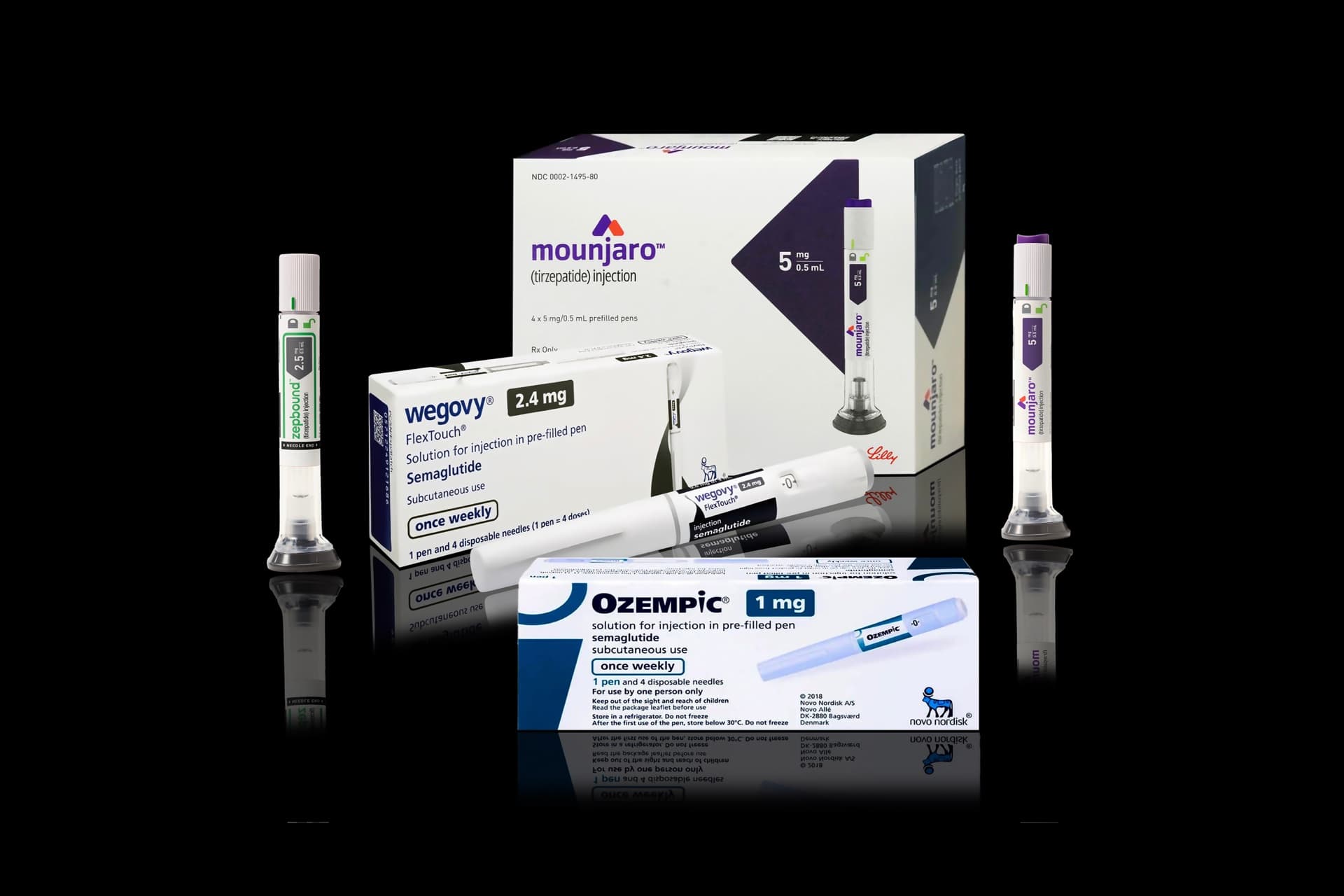
Semaglutide is sold under three brand names, all manufactured by Novo Nordisk:
- Ozempic -- weekly injection, FDA-approved for type 2 diabetes (doses 0.25 mg, 0.5 mg, 1 mg, 2 mg)
- Wegovy -- weekly injection, FDA-approved for chronic weight management in 2021 (doses up to 2.4 mg) [3]
- Rybelsus -- daily oral tablet, approved for type 2 diabetes
For weight loss specifically, Wegovy is the on-label choice. The pivotal trial, STEP 1, randomized 1,961 adults with a BMI of 30 or higher (or 27 with a weight-related comorbidity) to weekly semaglutide 2.4 mg or placebo, both alongside lifestyle counseling. Over 68 weeks, the semaglutide group lost an average of 14.9 percent of body weight versus 2.4 percent on placebo. About 86 percent of people on semaglutide lost at least 5 percent of body weight, and roughly one third lost 20 percent or more [1].
Dosing follows a slow titration: 0.25 mg weekly for four weeks, then 0.5 mg, 1 mg, 1.7 mg, and finally 2.4 mg at week 17 if tolerated. That slow ramp is your single biggest tool for keeping nausea manageable.
A separate trial, SELECT, gave cardiologists a reason to pay attention. In 17,604 adults with overweight or obesity and established cardiovascular disease but no diabetes, semaglutide 2.4 mg cut the risk of major adverse cardiovascular events (heart attack, stroke, or cardiovascular death) by 20 percent over a mean follow-up of 39.8 months [9]. That changed how the drug is viewed outside weight-loss clinics.
Tirzepatide deep-dive
Tirzepatide is made by Eli Lilly under two brand names:
- Mounjaro -- weekly injection, FDA-approved for type 2 diabetes in 2022 (doses 2.5 mg through 15 mg)
- Zepbound -- weekly injection, FDA-approved for chronic weight management in November 2023 [4]
The headline trial is SURMOUNT-1: 2,539 adults without diabetes, BMI of 30 or higher (or 27 with a weight-related condition), randomized across three tirzepatide doses (5, 10, 15 mg) versus placebo for 72 weeks. Mean weight reductions were:
- 15 mg dose: 20.9 percent
- 10 mg dose: 19.5 percent
- 5 mg dose: 15.0 percent
- Placebo: 3.1 percent
At the highest dose, 57 percent of participants lost at least 20 percent of their body weight, and 36 percent lost at least 25 percent [2]. Outside of bariatric surgery, no medication had ever produced numbers like that.
Tirzepatide titrates similarly: 2.5 mg weekly for four weeks, then steps up by 2.5 mg every four weeks until the maintenance dose (5, 10, or 15 mg). The longer titration is part of why GI side effects, while common, tend to fade.
Head-to-head comparison
The cleanest comparison so far is SURPASS-2, which pitted tirzepatide against semaglutide 1 mg in adults with type 2 diabetes (not the obesity dose, but still the most rigorous head-to-head we have). All three tirzepatide doses produced greater weight loss and greater A1C reductions than semaglutide [5].
For weight loss in non-diabetic adults, no large head-to-head trial has compared Wegovy 2.4 mg with Zepbound 15 mg yet. Indirect comparisons of STEP 1 and SURMOUNT-1 give us the table below. Treat the absolute numbers as ballpark, since the trial populations weren't identical.
| Factor | Semaglutide (Wegovy 2.4 mg) | Tirzepatide (Zepbound 15 mg) |
|---|---|---|
| Mean weight loss in pivotal trial | 14.9% over 68 weeks [1] | 20.9% over 72 weeks [2] |
| Percent losing greater than or equal to 20% body weight | About 32% | About 57% |
| Mechanism | GLP-1 receptor agonist | Dual GLP-1 and GIP receptor agonist |
| Cardiovascular outcomes data | Yes (SELECT trial) [9] | Pending (SURMOUNT-MMO ongoing) |
| Titration period | 16 weeks to full dose | 20 weeks to full dose |
| Common side effects | Nausea, constipation, diarrhea | Nausea, diarrhea, decreased appetite |
| Brand list price (monthly, approximate) | $1,349 (Wegovy) | $1,059 (Zepbound) |
| Direct-pay options | Wegovy NovoCare vials, $499 starting | LillyDirect vials, $349 to $499 starting |
| Generic or branded only | Branded only | Branded only |
Tirzepatide produces more average weight loss in published trials. That's the honest answer. It does not automatically follow that tirzepatide is the right drug for you. If you've already lost 14 percent of your body weight on semaglutide, switching to tirzepatide doesn't add more weight loss on top, and you probably don't need to switch at all.
Side effects and safety
The most common adverse events with both drugs are gastrointestinal: nausea, loose stools or constipation, occasional vomiting, and a queasy fullness after meals. In STEP 1, GI side effects affected 74.2 percent of semaglutide users versus 47.9 percent on placebo [1]. SURMOUNT-1 reported similar rates across tirzepatide doses [2]. Most are mild to moderate and settle as your body adapts. Slow titration, smaller meals, skipping fried and very fatty foods during dose increases, and steady hydration handle most of it.
The labels carry several warnings worth taking seriously:
- Pancreatitis -- rare, but real. Sudden severe upper-abdominal pain that radiates to the back, with or without vomiting, is a reason to stop the medication and call your provider.
- Gallbladder disease -- rapid weight loss raises gallstone risk. Both labels list cholelithiasis and cholecystitis as adverse reactions [3][4].
- Medullary thyroid carcinoma (MTC) and MEN2 -- both drugs carry a boxed warning based on rodent thyroid C-cell tumors. They're contraindicated in anyone with a personal or family history of medullary thyroid carcinoma or Multiple Endocrine Neoplasia syndrome type 2 [3][4].
- Pregnancy -- not recommended. Use effective contraception while on therapy, and stop semaglutide at least two months before trying to conceive.
- Diabetic retinopathy -- semaglutide can transiently worsen diabetic retinopathy in people who already have it.
- Anesthesia risk -- because gastric emptying is delayed, the American Society of Anesthesiologists recommends discussing whether to hold these medications before elective surgery under general anesthesia.
Hypoglycemia is uncommon when these drugs are used on their own, but it can happen if you also take insulin or sulfonylureas. Those doses often need to come down on day one of GLP-1 therapy.
Who should pick which
There's no one-size-fits-all answer, but a few patterns hold up in clinical practice.
Tirzepatide tends to be the better choice if:
- You have a higher starting BMI (say, above 35) and want maximum weight loss
- You also have type 2 diabetes and need stronger glycemic control
- You've tried semaglutide and plateaued before reaching your goal
- Cost is similar for you (LillyDirect direct-pay vials currently undercut Wegovy on entry tiers)
Semaglutide tends to be the better choice if:
- You have established cardiovascular disease and want a drug with proven CV outcome benefit (SELECT) [9]
- You tolerated 1 mg Ozempic well in the past and your insurance covers Wegovy
- You prefer the longer real-world track record (Wegovy approved 2021 versus Zepbound 2023)
- You need an oral option (Rybelsus, though it's FDA-approved for diabetes, not weight loss)
Either is reasonable if:
- You're starting from BMI 30 to 35 with no major comorbidities
- Your insurance pushes you toward one over the other
- You're in the early titration period and haven't yet seen what your response looks like
A real-world example. A 48-year-old with a BMI of 38, prediabetes, sleep apnea, and a family history of early heart disease asks which drug to take. Either is defensible, but semaglutide carries the cardiovascular outcomes label, so it earns the first slot. If she'd already tried semaglutide and stalled at 11 percent body weight lost, switching to tirzepatide would be a fair next step.
What "compounded" semaglutide and tirzepatide is and isn't
Compounded GLP-1s flooded the market in 2023 and 2024 because the FDA-listed brand-name shortages let licensed compounding pharmacies prepare a copy. That window is essentially closed. Tirzepatide was removed from the FDA shortage list in October 2024, and semaglutide came off in February 2025. The FDA has been clear: outside of patient-specific medical exceptions, mass compounding of these medications is no longer permitted under section 503A or 503B of the Federal Food, Drug, and Cosmetic Act [8].
A few practical concerns hang around with compounded products:
- The active ingredient may come from facilities not registered with the FDA, with variable purity
- Some compounded versions use semaglutide salts (semaglutide sodium, semaglutide acetate) that aren't the same molecule studied in the STEP and SUSTAIN trials. The FDA has stated those salts haven't been shown to be safe or effective [8]
- Dosing accuracy in syringes prepared by compounders has been inconsistent, contributing to dosing errors and ER visits
- Adverse events may not be captured in the same surveillance system as branded products
Compounded products are sometimes cheaper. That's the honest appeal. The trade-off is real, and the regulatory floor sits lower. At Nomi Beach Health we use FDA-approved branded products only.
How medical weight loss works at Nomi Beach Health
Our medical weight loss program is built on the assumption that the medication is one piece of a longer plan. The monthly membership includes:
- A new-patient evaluation with a provider, including labs (A1C, lipids, comprehensive metabolic panel, TSH, when indicated)
- A prescription for FDA-approved semaglutide (Wegovy) or tirzepatide (Zepbound) when clinically appropriate, billed through your pharmacy or, when feasible, the manufacturer's direct-pay channel
- Monthly follow-up visits to track weight, blood pressure, side effects, and dose titration
- Adjustments to other medications (blood pressure, diabetes, lipids) as your numbers improve
- A clear plan for what happens if you plateau, if side effects become a problem, or if your insurance changes
- A maintenance plan for after you hit your goal weight
We don't promise quick fixes, before-and-after photos, or a specific number on the scale. We promise an experienced provider who'll look at the whole picture, treat the medication as a tool rather than a brand, and stay engaged for the long arc of weight management.
Closing nudge to consult
If you've read this far, you're not asking for a sales pitch. You're asking whether one of these medications, used carefully, could help. The honest answer is probably yes, with the right oversight, the right titration, and a plan that doesn't assume the drug does all the work.
Schedule a consultation and we'll look at your history, your labs, your insurance, your goals, and the medications themselves. The goal isn't to start a drug. It's for you to feel better in your body and stay that way.
Frequently Asked Questions
- Do I need to be diabetic to qualify for semaglutide or tirzepatide?
- No. Wegovy (semaglutide 2.4 mg) and Zepbound (tirzepatide) are FDA-approved specifically for chronic weight management in adults with a BMI of 30 or higher, or 27 or higher with at least one weight-related condition such as high blood pressure, sleep apnea, or dyslipidemia. Ozempic and Mounjaro are approved for type 2 diabetes; using them for weight loss alone is off-label.
- How fast do these medications work?
- Most people notice reduced appetite within the first one to two weeks. Measurable weight loss typically appears by week 8 to 12, with the largest reductions occurring during the first 6 to 9 months as the dose is titrated up. Trial averages were measured at 68 weeks for semaglutide and 72 weeks for tirzepatide.
- What does it cost without insurance?
- Brand-name list prices run roughly $1,000 to $1,350 per month for both Wegovy and Zepbound, though Eli Lilly's LillyDirect direct-pay vials for Zepbound have brought entry doses closer to $349 to $499 per month. Manufacturer savings cards can lower out-of-pocket cost for some commercially insured patients. Pricing changes frequently, so confirm at your visit.
- Will my insurance cover it?
- Coverage for obesity medications remains inconsistent. Many commercial plans cover Ozempic and Mounjaro for type 2 diabetes but exclude Wegovy and Zepbound for weight loss. Medicare currently does not cover anti-obesity medications, with limited exceptions for cardiovascular indications. We verify your benefits before starting.
- What happens when I stop taking the medication?
- Appetite-suppressing effects fade within weeks, and most people regain a meaningful portion of the weight they lost over the following year unless habits and structure stay in place. The STEP 4 extension showed about two-thirds of weight lost was regained within a year of stopping semaglutide. Long-term planning matters.
- Are compounded versions safe?
- Compounded GLP-1s exist in a regulatory gray zone. The FDA permits compounding only when a drug is officially in shortage, and both semaglutide and tirzepatide were removed from the shortage list in late 2024 and early 2025. Quality, dosing accuracy, and source of the active ingredient vary between compounders. We use FDA-approved branded products.
Sources
- Wilding JPH et al. Once-Weekly Semaglutide in Adults with Overweight or Obesity (STEP 1). NEJM 2021
- Jastreboff AM et al. Tirzepatide Once Weekly for the Treatment of Obesity (SURMOUNT-1). NEJM 2022
- FDA Approves New Drug Treatment for Chronic Weight Management (Wegovy)
- FDA Approves New Medication for Chronic Weight Management (Zepbound)
- Frias JP et al. Tirzepatide versus Semaglutide Once Weekly in Type 2 Diabetes (SURPASS-2). NEJM 2021
- Rubino D et al. Effect of Continued Weekly Semaglutide vs Placebo on Weight Loss Maintenance (STEP 4). JAMA 2021
- American Diabetes Association Standards of Care in Diabetes 2024: Obesity and Weight Management
- FDA: Medications Containing Semaglutide and Tirzepatide Marketed for Type 2 Diabetes or Weight Loss
- Lincoff AM et al. Semaglutide and Cardiovascular Outcomes in Obesity without Diabetes (SELECT). NEJM 2023
- Mayo Clinic: GLP-1 Agonists for Weight Loss
Treatments related to this article
Ready to talk through this with a provider? Start with one of these services.