You've been thinking about it for a while. You catch your reflection in the rearview mirror and the line between your brows is still there, even though you're not frowning. One friend got Botox and looks great. Another got it and looks weird. You can't quite tell what makes the difference. You want the rested version of yourself, not a different face. That's where most people are when they finally book a consult, and it's a completely reasonable place to start.
Here's a practical guide to what Botox actually is in 2026: what it does well, what it doesn't do, what it costs, and what to expect at your first appointment.
What Botox actually is
Botox is a brand name. The drug is onabotulinumtoxinA, a purified protein produced by the bacterium Clostridium botulinum. Allergan launched it as a cosmetic product in 2002, and it's still the most-studied neuromodulator on the market [1].
The whole category is called botulinum toxin type A, and there are five FDA-approved products in the US: Botox (onabotulinumtoxinA), Dysport (abobotulinumtoxinA), Xeomin (incobotulinumtoxinA), Daxxify (daxibotulinumtoxinA), and Jeuveau (prabotulinumtoxinA) [1][2][3][4][5]. Patients call all of them "Botox." Clinicians use the specific names because dosing and behavior differ.
In plain terms: when you make a facial expression, your motor nerves release a signaling molecule called acetylcholine that tells the muscle to contract. Botulinum toxin enters the nerve terminal and cleaves a SNARE protein (specifically SNAP-25 for the type A toxins) the nerve needs to release acetylcholine. With that protein cut, the nerve can't send the contract signal, and the targeted muscle relaxes. Over the next few months, the nerve grows new terminals, the SNARE machinery rebuilds, and movement returns. That's why it's reversible, and why it has to be repeated [1][7].
The toxin doesn't move through your bloodstream in any meaningful way at cosmetic doses. It binds locally to the nerves at the injection site.
What Botox treats
The cosmetic indications most people come in for:
- Glabellar lines (the "11s" between the brows): FDA-approved for all five major brands [1][2][3][4][5]
- Forehead lines (horizontal lines across the forehead): FDA-approved for Botox and Dysport [1][2]
- Crow's feet (lateral canthal lines around the eyes): FDA-approved for Botox [1]
Beyond those three, a lot of the most useful work is off-label. Off-label doesn't mean unsafe or experimental. It means the FDA hasn't formally approved that specific use, usually because the manufacturer didn't run a multi-million dollar trial for it. Common, well-studied off-label aesthetic uses:
- Bunny lines (the wrinkles on the sides of the nose when you scrunch)
- Lip flip (a few small units in the orbicularis oris to soften a "gummy" smile or evert the upper lip slightly)
- Gummy smile (treating the levator labii superioris alaeque nasi to lower the upper lip on a high smile)
- Masseter reduction (slimming a square jawline and treating bruxism by relaxing the chewing muscles)
- Platysmal bands (the vertical neck cords, sometimes called a "Nefertiti lift")
- Chin dimpling (the "pebble" or orange-peel chin)
Medical (non-cosmetic) FDA-approved indications include chronic migraine (155 units in a specific 31-site protocol per the PREEMPT trials) [11], severe primary axillary hyperhidrosis (excessive underarm sweating) [10], cervical dystonia, blepharospasm, strabismus, overactive bladder, and upper and lower limb spasticity. These are usually billed through medical insurance once documented criteria are met, not paid out-of-pocket like cosmetic visits. Bruxism (jaw clenching) isn't formally FDA-approved but is one of the most common, and most effective, off-label medical uses [6].
The first appointment
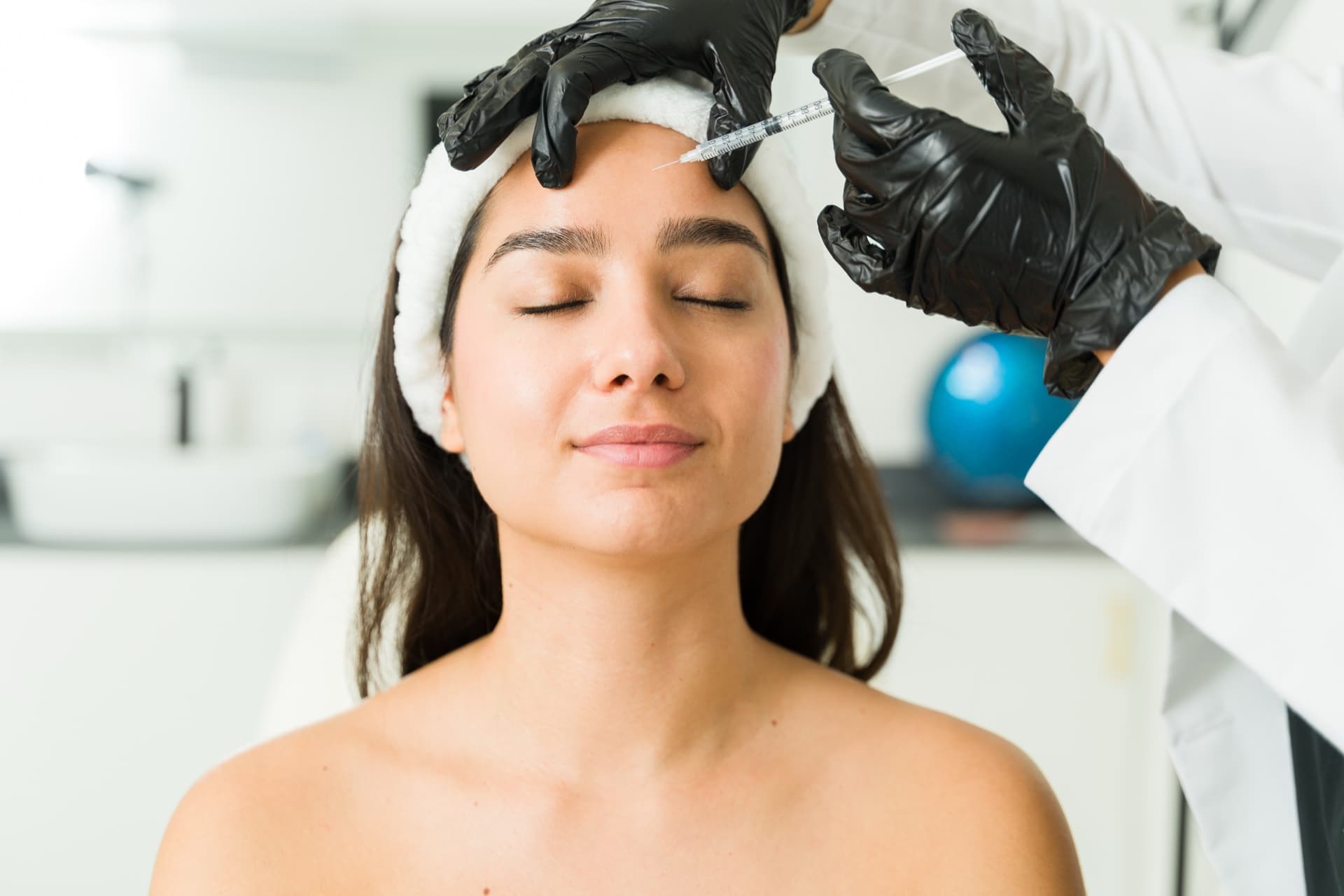
A real consult starts with conversation, not a needle. A good provider will ask what bothers you, hand you a mirror, and have you make a few expressions: full frown, full surprise, full squint. They're watching where the lines form and how strong the muscles are.
Then comes mapping. Most providers mark injection points with an eyeliner pencil or skin-safe marker. They take baseline photos at rest and in animation, both for safety and so you can see your own results at follow-up. Skip the consult that doesn't include photos.
Dose is the thing patients ask about least and should ask about most. Typical Botox starting ranges [1][6]:
- Glabellar (11s): 20 units (the FDA-approved on-label dose)
- Forehead: 6 to 16 units, often combined with glabella to prevent brow drop
- Crow's feet: 12 units total (6 per side)
- Lip flip: 2 to 4 units
- Masseter (per side): 20 to 50 units depending on muscle bulk
- Platysmal bands: 25 to 60 units total
Stronger muscles need more. Men generally need 1.5 to 2x the dose women do for the same area, because their facial musculature is larger and denser.
What it feels like: with a 30 or 32 gauge needle, most people describe each point as a quick sting that lasts about a second. You don't need numbing for most upper-face work. The whole appointment runs 10 to 20 minutes after the consult.
Downtime is minimal. Tiny pink bumps at each injection site for 15 to 30 minutes, sometimes a small bruise or two. Most people walk straight back to work or a meeting and no one knows.
Results timeline
You won't look different leaving the office. The drug needs time to bind into the nerve terminals and stop signaling. Expect a slightly awkward few days where you keep checking the mirror and nothing's happening yet. That's normal.
- Day 1 to 2: nothing yet. Some people see early softening at day 2 or 3.
- Day 3 to 7: onset, with movement noticeably reduced.
- Day 10 to 14: peak effect. This is when to book your follow-up if anything looks asymmetric or under-dosed. Most reputable practices include a free touch-up at the 2-week mark.
- Months 3 to 4: standard duration for Botox, Dysport, Xeomin, and Jeuveau in the upper face. Strong muscles, smaller doses, and a fast metabolism shorten this; lighter muscles and higher doses lengthen it [1][2][3][5].
- Months 4 to 6+: Daxxify trial data show a median duration around 6 months in the SAKURA-1 and SAKURA-2 pivotal trials for glabellar lines, with some patients seeing 9 [4][8].
Cost transparency
There are two pricing models in the US, and you should know which one you're looking at before you sit in the chair.
Per-unit pricing is the more transparent model. You pay for what gets injected. In 2026 dollars, average per-unit pricing across major US metros runs:
- Botox: $13 to $20 per unit
- Dysport: $4 to $7 per unit (Dysport units are smaller; roughly 2.5 to 3 Dysport units = 1 Botox unit, so the total cost ends up similar)
- Xeomin: $11 to $16 per unit
- Daxxify: $7 to $10 per unit, but you typically need fewer total units and treatments per year
- Jeuveau: $10 to $14 per unit
Per-area pricing bundles a flat rate for "the 11s" or "forehead." Convenient, but you can't tell if you're getting 12 units or 24 for the same price. Lower-cost per-area deals sometimes mean under-dosing.
Realistic full-face budgets for a first treatment, using on-label and common off-label areas (glabellar + forehead + crow's feet), run $400 to $900 at a reputable medical practice in 2026, more in major metros. Add masseters or platysmal bands and you're in the $800 to $1,500 range. Daxxify costs more upfront, but you go in two to three times a year instead of three to four [8].
If a deal looks shockingly cheap, ask three questions: is this a board-certified medical provider, what brand and lot number am I receiving, and how many units total. Counterfeit and gray-market neurotoxin is a real problem [6].
Botox vs Dysport vs Xeomin vs Daxxify vs Jeuveau
All five are botulinum toxin type A. They differ in formulation, accessory proteins, onset, duration, spread pattern, and price [1][2][3][4][5][8][9].
| Brand | Onset | Peak | Typical Duration | Best Known For |
|---|---|---|---|---|
| Botox (onabotulinumtoxinA) | 3-5 days | 10-14 days | 3-4 months | The gold standard. Most predictable, most data, broadest medical indications |
| Dysport (abobotulinumtoxinA) | 1-3 days | 7-14 days | 3-4 months | Faster onset; spreads slightly more, which can be ideal for forehead and crow's feet but means careful dosing near the brow |
| Xeomin (incobotulinumtoxinA) | 3-5 days | 7-14 days | 3-4 months | "Naked" toxin with no complexing proteins; lower theoretical risk of antibody resistance for patients on long-term therapy |
| Daxxify (daxibotulinumtoxinA) | 1-2 days | 14 days | 6 months (median in trials) | Longer duration. Stabilized with a peptide instead of human serum albumin [8] |
| Jeuveau (prabotulinumtoxinA) | 2-3 days | 14 days | 3-4 months | Cosmetic-only ("Newtox"). Often the most price-competitive [9] |
For most first-timers, Botox or Dysport is a safe starting point because providers have the most experience with them. Daxxify is worth considering if you genuinely hate the every-three-months cadence and want longer hold. Xeomin is a strong choice if you've been getting injections for years and feel like they aren't lasting as long as they used to (a sign of possible neutralizing antibodies).
Risks and side effects
Common, mild, and self-limited:
- Bruising at injection sites (5 to 25% of patients depending on technique and aspirin/NSAID use)
- Headache for 24 to 48 hours, usually mild
- Pinpoint redness for 15 to 30 minutes
- Mild tenderness at injection sites for a day or two
Less common but real:
- Eyelid ptosis (drooping upper eyelid): 1 to 5% of glabellar treatments, usually from product diffusing into the levator palpebrae superioris. Resolves over 2 to 8 weeks. Apraclonidine eye drops can lift the eyelid temporarily.
- Brow ptosis (heavy or flattened brow): more often from over-treating the forehead without balancing the glabella.
- Asymmetry: usually correctable at the 2-week touch-up.
- Smile changes with crow's feet treatment if injections are placed too low or too medial.
- Dry mouth, dysphagia (trouble swallowing) with platysmal or masseter dosing if technique is off.
Rare and serious: the FDA boxed warning for all botulinum toxin products notes the toxin can rarely spread beyond the injection site and produce systemic muscle weakness, including breathing or swallowing problems [1]. This hasn't been reported at standard cosmetic doses, but it's the reason every product carries the warning. Pregnancy and breastfeeding are contraindications. So are active infection at the injection site, certain neuromuscular disorders (myasthenia gravis, Lambert-Eaton, ALS), and known allergy to any component.
Aftercare rules
The 24 to 48 hour list, kept short on purpose:
- Do stay upright for 4 hours
- Do gently use the treated muscles (frown, raise brows, smile) over the first hour. Animation in the early window is fine and may improve uptake.
- Do not rub, massage, or apply pressure to the treated areas for 24 hours
- Do not lay flat or do downward dog yoga for at least 4 hours
- Do not do vigorous exercise, sauna, or hot yoga for 24 hours
- Do not get a facial, microneedling, laser, or any face-down massage for 24 to 48 hours
- Avoid alcohol, aspirin, ibuprofen, fish oil, vitamin E, and ginkgo for 24 hours after if possible to reduce bruising (and ideally for 3 to 5 days before, unless prescribed for a medical reason)
A small bump of Arnica or topical vitamin K can help bruises fade faster. Neither is required.
Choosing an injector
This is the single most important decision you make. The drug is the same; the result is not.
What to look for:
- Credentials: a licensed medical provider (MD, DO, NP, PA, or in some states RN under physician supervision). The medical license is the floor, not the ceiling.
- Anatomy training: ask where they trained for facial injectables specifically. Strong injectors have done cadaver courses, advanced injection workshops, and ideally hold an aesthetic-specific board certification.
- Volume: how many of these do they do per month? A provider injecting 50+ neurotoxin patients a month is going to have better hands than one doing 5.
- A real before-and-after portfolio: not stock photos. Patient photos at rest and in animation, ideally at the 2-week mark, ideally on patients with similar features to yours.
- A consult that includes alternatives: a good injector will tell you when Botox is not the right answer. Some lines are static and need filler or resurfacing, not a neuromodulator.
- Photos at every visit: standard of care.
Red flags: pressure to buy multiple syringes today, no discussion of risks, no photos, group-buy "Botox parties," or a provider who promises a specific number of years younger.
Botox at Nomi Beach Health
At Nomi Beach Health, neuromodulator treatments are performed by Dr. Jezwah Harris, a quadruple board-certified clinician with a Medical Aesthetic Practice (MEP-C) certification and advanced training in cosmetic neurotoxins, dermal fillers, and PDO threads. Treatments are available at our North Miami Beach, Florida office.
How a visit runs:
- Consult: 20 to 30 minutes. We talk about what bothers you, what you want to keep, and what's realistic. We map the face, take baseline photos in rest and animation, and quote the units up front before any product is opened.
- Treatment: usually 10 to 15 minutes. Botox, Dysport, Xeomin, Daxxify, and Jeuveau are all in inventory. We'll recommend based on your goals, your history with neurotoxins, and your timeline.
- Two-week follow-up: included. Touch-ups for asymmetry or under-dosing are complimentary in this window.
- Maintenance schedule: tracked in your chart, so we can see how your dose, duration, and pattern evolve over time.
We don't run flash sales on neurotoxin, and we don't recommend getting injectables anywhere that does. The product is too potent to be a discount item.
When to book the consult
If you've read this far, you've done your homework. The next move is sitting down with a provider who'll tell you whether your specific concern is best addressed with Botox, a different neuromodulator, filler, a laser, or no procedure at all. Honest answers come from a consult, not a website.
Book a consult at nomibeach.health/aesthetics or call our front desk.
About the author. Dr. Jezwah Harris (JD, MSN, MBA, NP-C, FNP-BC, MEP-C, NE-BC) is the founder of Nomi Beach Health and a quadruple board-certified clinician with advanced training in cosmetic neurotoxins, dermal fillers, and PDO threads.
This article is for educational purposes only and is not medical advice. Botulinum toxin is a prescription medication and should only be administered by a licensed medical professional after a personalized evaluation.
Frequently Asked Questions
- How long does Botox last?
- Most people see results last 3 to 4 months from a standard glabellar or forehead treatment with onabotulinumtoxinA. Daxxify (daxibotulinumtoxinA) tends to last longer in clinical trials, with median duration around 6 months for some patients. Duration varies with dose, muscle strength, metabolism, and how active the treated area is.
- Will I look frozen?
- Not if your injector dosed you correctly. A natural result preserves expression while softening the lines that show up at rest. The frozen look usually comes from too many units in the wrong pattern, not from Botox itself. Tell your provider during the consult exactly how much movement you want to keep.
- Does Botox actually hurt?
- It is closer to a quick pinch than real pain. Most providers use a 30 to 32 gauge needle, and a typical session uses anywhere from 4 to 20 small injections depending on the areas. Topical numbing or ice can blunt the sting, but most patients tell us the anticipation was worse than the appointment.
- Can men get Botox?
- Yes, and it is one of the fastest growing groups in cosmetic injectables. Men generally have larger, stronger muscles in the forehead and glabella, so dosing is higher. Done right, the result is a rested, less tense look, not a feminized one.
- Can I exercise after Botox?
- Skip vigorous exercise, hot yoga, saunas, and anything that lays you flat for at least 4 hours, ideally 24 hours. The concern is increased blood flow and the small theoretical risk of toxin migration before it binds. Walking and light activity are fine.
- What age should I start Botox?
- There is no magic number. Most clinicians treat lines once they start to etch in at rest, which for many people is late twenties to mid thirties. Starting earlier as preventive Botox is reasonable for some patients with strong expressive muscles, but it is not required and not right for everyone.
Sources
- FDA Prescribing Information -- BOTOX (onabotulinumtoxinA)
- FDA Prescribing Information -- Dysport (abobotulinumtoxinA)
- FDA Prescribing Information -- Xeomin (incobotulinumtoxinA)
- FDA Prescribing Information -- Daxxify (daxibotulinumtoxinA-lanm)
- FDA Prescribing Information -- Jeuveau (prabotulinumtoxinA-xvfs)
- American Society of Plastic Surgeons -- Botulinum Toxin Treatment Guide
- American Academy of Dermatology -- Botulinum Toxin Therapy: Overview
- Carruthers JA, et al. SAKURA pivotal trials of daxibotulinumtoxinA for glabellar lines. Plast Reconstr Surg. 2020
- Beer KR, et al. Phase 3 trials of prabotulinumtoxinA (EV-001/EV-002) for glabellar lines. Dermatol Surg. 2019
- Naumann M, et al. Botulinum toxin for axillary hyperhidrosis: randomized controlled trial. N Engl J Med. 2007
- Diener HC, et al. PREEMPT chronic migraine trials: onabotulinumtoxinA. Cephalalgia. 2010
- American Society for Dermatologic Surgery -- 2024 Consumer Survey on Cosmetic Procedures
Treatments related to this article
Ready to talk through this with a provider? Start with one of these services.