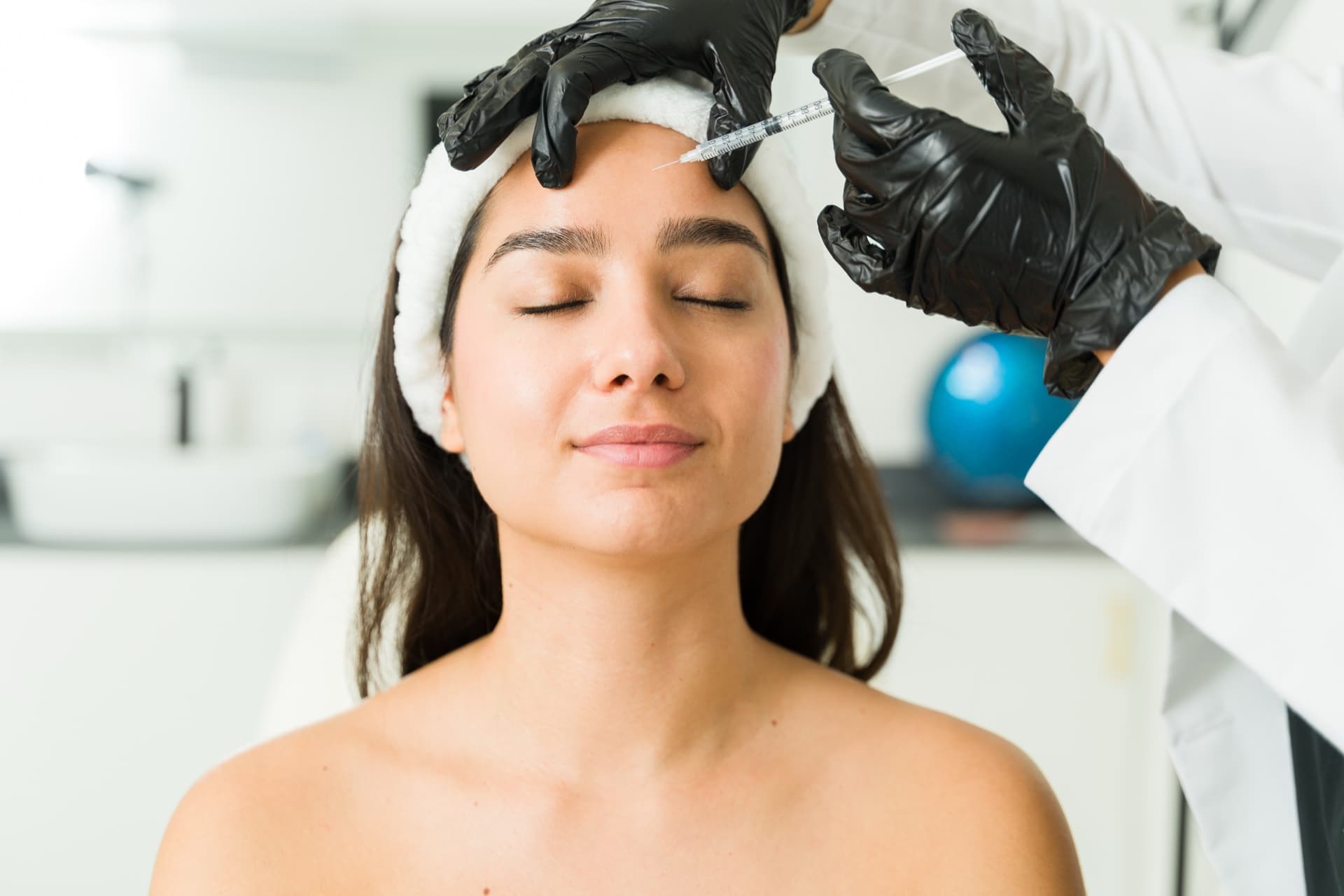
You've been studying your face in different light. Maybe your cheeks look flatter than they did five years ago. Maybe a shadow has settled under each eye. Maybe your lips feel thinner, or your jawline less defined. You've heard about dermal fillers from friends or your dermatologist, but the whole category is confusing. There are dozens of products. The before-and-after photos online run from beautifully natural to alarmingly overdone. You want to look like a refreshed version of yourself, not a different person.
Here is a clinician's guide to what dermal fillers actually are in 2026: how they work, what each product does best, what they cost, what can go wrong, and how to choose a provider you can trust.
What dermal fillers actually are
The category called "dermal fillers" is really three different things grouped under one shopping label.
Hyaluronic acid (HA) fillers are the most common. Hyaluronic acid is a sugar molecule your skin already makes. It binds water, supports volume, and contributes to the cushion-like quality of healthy skin. Manufactured HA fillers are cross-linked into a gel, sterilized, and packaged into syringes. Once injected, they sit in the dermis or deeper soft tissue, attract water, and add volume directly. The most familiar brand families are Juvederm (Allergan), Restylane (Galderma), Belotero (Merz), and the newer RHA collection (Revance) [1][5][6].
Biostimulators do not add volume directly. They trigger your own collagen production over weeks. The two FDA-cleared biostimulators in the US are Sculptra (poly-L-lactic acid) and Radiesse (calcium hydroxylapatite). Sculptra works gradually across multiple sessions; Radiesse provides some immediate lift while collagen rebuilds [7].
Permanent and semi-permanent fillers like Bellafill (PMMA microspheres in collagen) are used selectively, mostly for acne scars or specific deep folds. Most reputable practices avoid permanent fillers for facial volumization because complications, when they happen, are also permanent.
HA fillers are the workhorses of the industry, and for good reason: they are reversible. Hyaluronidase, an enzyme injected into the area, dissolves them in 24 to 48 hours. That single fact is why HA fillers dominate the market and why most first-timers should start there [3].
What fillers actually treat
The honest list is shorter than the menu at most med spas. Done well, fillers can:
- Restore volume in the mid-cheek that has flattened with age or weight loss
- Soften the tear trough (the hollow under the eye), in carefully selected candidates
- Smooth nasolabial folds (the lines from nose to mouth corners)
- Reduce marionette lines and pre-jowl shadowing
- Define the chin and improve a weak or recessed jawline
- Add structure along the mandibular border for a sharper jaw silhouette
- Add subtle volume and shape to the lips
- Correct minor asymmetries on the nose (non-surgical rhinoplasty)
- Improve the appearance of acne scarring in selected patients
- Rejuvenate the back of the hands, where volume loss is often missed
Fillers do not treat everything. Static lines etched into thin skin, deep wrinkles from sun damage, loose skin, and severe jowls are usually better addressed with laser resurfacing, microneedling with radiofrequency, neuromodulators, threads, or surgery. A good consult tells you when filler is not the answer.
Hyaluronic acid filler families compared
The major HA brands each include several products with different stiffness, cohesivity (how the gel holds its shape), and flow characteristics. Stiffer products give more lift in deeper, structural areas like the cheekbone or chin. Softer products integrate into delicate tissue like lips or tear troughs without leaving lumps.
| Brand Family | Stiffer / Structural | Mid-Range | Softer / Delicate | Strengths |
|---|---|---|---|---|
| Juvederm | Voluma XC | Vollure XC, Volux XC | Volbella XC, Ultra XC, Ultra Plus | Smooth, cohesive gel; widely available; strong cheek and chin data [5] |
| Restylane | Lyft, Defyne | Restylane-L, Refyne | Kysse, Silk, Eyelight | Versatile range; Eyelight is well-suited for tear troughs [6] |
| Belotero | Volume | Balance, Intense | Soft | Excellent integration in fine lines; minimal Tyndall risk in shallow placement |
| RHA Collection | RHA 4 | RHA 2, RHA 3 | RHA Redensity | "Resilient HA" designed to move naturally with dynamic expression |
Picking a product is a clinical decision based on the area, depth of placement, and what you want to achieve. A skilled injector should be able to explain why. If your provider only carries one brand for the entire face, that is worth a question.
Sculptra and Radiesse: when biostimulators make sense
Biostimulators are different in concept. Instead of adding volume on the day of treatment, they cue your skin to make more of its own collagen over weeks to months [7].
Sculptra (poly-L-lactic acid) is reconstituted with sterile water and lidocaine, then injected in deeper planes. It typically requires two to three sessions spaced about a month apart. The final look matures around 8 to 12 weeks after the last session and tends to last about 25 months [7]. Sculptra is well-suited for global facial atrophy, the soft hollowing many people see in their late forties and beyond, and for body areas like buttocks and decolletage.
Radiesse (calcium hydroxylapatite) sits between an HA filler and Sculptra: some immediate lift, plus collagen building over months. It is particularly useful in the jawline, chin, and back of the hands. A diluted form (Hyperdilute Radiesse) is also used for skin quality on the neck and decolletage.
Neither biostimulator is reversible. Hyaluronidase will not dissolve them. Provider experience matters even more here than with HA fillers.
Results timeline
Day-of-procedure looks are not the final result. Plan for the timeline below.
- Day 1: Initial volume is visible, but expect some asymmetric swelling and small bruises. Lips look puffier than they will at week 2.
- Days 2 to 7: Most of the swelling resolves. Bruising peaks around day 3, then fades.
- Day 14: This is when to assess results. The product has integrated with surrounding tissue, swelling is gone, and you and your provider can decide whether a touch-up is needed.
- Months 2 to 3: Most natural-looking integration with tissue movement.
- Months 6 to 24: Gradual breakdown depending on product and area. Lips and perioral areas typically need refresher visits earlier than cheeks.
Sculptra follows a different curve. You may see almost no change after session one, modest improvement after session two, and the substantial collagen-built result by 8 to 12 weeks after the final session.
Cost transparency
Real 2026 ranges in the United States, in a board-certified medical practice:
HA fillers, per syringe:
- Juvederm: $700 to $1,200 per 1 mL syringe
- Restylane: $650 to $1,100 per 1 mL syringe
- RHA Collection: $800 to $1,300 per 1 mL syringe
- Belotero: $650 to $950 per 1 mL syringe
Biostimulators, per session:
- Sculptra: $850 to $1,400 per vial, with two to three vials typical for a full course
- Radiesse: $750 to $1,200 per 1.5 mL syringe
Realistic full-face budgets [10]:
- A subtle lip refresh: $700 to $1,200 (typically 0.5 to 1 mL)
- Mid-cheek and tear trough correction: $1,800 to $3,500 (2 to 4 mL of mid-stiffness HA)
- Chin and jawline definition: $1,800 to $4,500 (2 to 4 mL, often Voluma, Volux, or Radiesse)
- Liquid facelift (cheeks, midface, chin, jaw, with or without temples): $4,500 to $9,000 across one to two sessions
- Sculptra full course: $2,500 to $4,500
Lower than these ranges should raise a question. Counterfeit and gray-market filler is a documented problem [3]. Bargain pricing usually means under-volumed product, an inexperienced injector, or unregulated supply.
Risks and side effects
Honest version, common to rare.
Common, mild, and self-limited [2][3]:
- Bruising at injection sites (10 to 30 percent of patients, higher in lips and tear troughs)
- Swelling for 2 to 7 days, more pronounced in lips and undereyes
- Tenderness for 24 to 72 hours
- Small palpable lumps in the first week that smooth out as the product integrates
Less common but real:
- Asymmetry, usually correctable at the 2-week visit
- The Tyndall effect, a bluish discoloration when HA filler is placed too superficially (most often in tear troughs). Treated by dissolving with hyaluronidase
- Filler migration, particularly in lips, when too much product is placed in too few sessions or the product picks the wrong plane
- Nodules or granulomas, late-onset firm areas that may require steroid injection, hyaluronidase, or oral therapy
- Persistent swelling with some HA products, especially in the tear trough area
- Reactivation of cold sores in patients with a history of HSV near the lips. Antiviral prophylaxis is reasonable for known carriers.
Rare and serious [3][8][9]:
- Vascular occlusion, when filler is placed into or compresses an artery, cutting off blood supply to skin or, in the worst cases, to the eye. Permanent vision loss is exceptionally rare but documented in the world literature [8]. Skin necrosis is rarer still in skilled hands but requires immediate hyaluronidase, warm compresses, aspirin, and emergency follow-up [9].
- Infection, including biofilm formation, is rare with sterile technique but possible weeks to months later.
- Allergic reactions to HA products and to lidocaine in pre-mixed HA fillers are uncommon.
The safety profile is excellent in experienced hands. Vascular complications are the reason every reputable practice keeps multiple vials of hyaluronidase on hand and uses a known emergency protocol. If your provider cannot tell you what they would do in the first 60 minutes after a vascular event, find another provider [8][9].
Who is and is not a candidate
Good candidates are healthy adults, generally 21 and older, with realistic expectations and a specific concern filler can address. Filler is not appropriate for:
- Pregnancy or breastfeeding (insufficient safety data)
- Active skin infection at the injection site
- Severe untreated bleeding disorders
- Known allergy to product components, including lidocaine
- Active autoimmune flare or unstable connective tissue disease, depending on the diagnosis
- Patients on isotretinoin (Accutane) within the past 6 months, depending on the procedure and provider judgment
- Patients with a history of severe filler complications who have not been fully evaluated
Patients with a history of biofilm complications or repeated late-onset nodules should be evaluated thoroughly before any new filler is placed.
Aftercare specifics
The first 48 hours matter most. Beyond that, normal life resumes.
- Keep the area cool with brief, gentle application of a clean cool compress for any swelling
- Sleep slightly elevated for the first 1 to 2 nights
- Avoid pressing, rubbing, or massaging the treated area unless your provider has shown you how
- Avoid vigorous exercise, hot yoga, saunas, and steam rooms for 24 to 48 hours
- Avoid alcohol for 24 hours after, ideally 24 hours before as well, to reduce bruising
- Avoid dental procedures and facials for at least 2 weeks (filler areas are vulnerable while healing)
- Avoid blood thinners (aspirin, ibuprofen, naproxen, fish oil, vitamin E, ginkgo) for 3 to 5 days before and 24 hours after, unless prescribed for a medical reason
Mild Arnica gel or oral Arnica may help bruises clear faster. Topical vitamin K can also help. Neither is required, and neither replaces sound technique.
Call your provider promptly if you experience severe pain that is out of proportion to a normal sting, blanching or whitening of the skin, dusky or bluish discoloration, vision changes, or sudden severe headache. These are vascular warning signs and need urgent evaluation, not next-week follow-up.
Choosing an injector
This is the single biggest decision you make. The product is the same across clinics. The result, and the safety, are not.
What to look for:
- Credentials: an actively licensed medical provider (MD, DO, NP, PA). Anatomy expertise is non-negotiable. Aesthetic-specific board certification (such as MEP-C) is an additional signal.
- Volume: ask how many filler patients they treat per month. Strong injectors are doing dozens, not a handful.
- Cannula and needle technique: experienced injectors use cannulas in high-risk areas like tear troughs, temples, and nasolabial folds because cannulas are blunt and far less likely to enter a vessel [8][9].
- Protocols for vascular complications: every reputable injector keeps multiple vials of hyaluronidase on site and can describe their plan if a vascular event happens.
- Photography: standardized photos at rest and animation, before and at follow-up. Skip the practice that does not photograph.
- Honest portfolios: real patient before-and-afters, not stock images, with similar features to yours.
- Willingness to say no: a strong provider will refuse to inject more product if they don't think it serves your face, even if you ask.
Red flags: pressure to buy multiple syringes the same day, group-buy "filler parties," extreme discounts, no photography, no consult, products in unmarked syringes, or a provider who will not name the brand and lot number being used.
Dermal fillers at Nomi Beach Health
At Nomi Beach Health, dermal filler treatments are performed by Dr. Jezwah Harris, a quadruple board-certified clinician with Medical Aesthetic Practice (MEP-C) certification, advanced training in dermal filler, advanced non-surgical rhinoplasty, and PDO threads. Treatments are available at our North Miami Beach, Florida office.
A typical visit:
- Consult: 30 to 45 minutes for new patients. We discuss what you want to change, take baseline photos at rest and in animation, evaluate facial structure, and recommend products and amounts. Pricing is presented before any product is opened.
- Treatment: 30 to 60 minutes depending on the plan. Topical numbing first. Multiple HA brands plus Sculptra and Radiesse are in inventory; we choose based on the area, your goals, and your history.
- Two-week follow-up: included. We compare photos and decide on touch-up.
- Vascular safety protocol: hyaluronidase is on site at every visit, and our team is trained on the immediate response.
We do not run flash sales on filler, and we do not chase trends. Filler done well is quiet.
When to book the consult
If you have specific concerns and want a clinician's opinion before deciding anything, that is the right reason to book. A real consult will tell you whether dermal filler is the best answer for your specific concern, whether a different treatment is more appropriate, or whether nothing at all is the right call right now.
Book a consult at nomibeach.health/aesthetics or call our front desk.
About the author. Dr. Jezwah Harris (JD, MSN, MBA, NP-C, FNP-BC, MEP-C, NE-BC) is the founder of Nomi Beach Health and a quadruple board-certified clinician with advanced training in dermal fillers, cosmetic neurotoxins, advanced non-surgical rhinoplasty, and PDO threads.
This article is for educational purposes only and is not medical advice. Dermal fillers are FDA-regulated medical devices and should only be administered by a licensed medical professional after a personalized evaluation.
Frequently Asked Questions
- Do dermal fillers hurt?
- Most modern hyaluronic acid fillers are pre-mixed with lidocaine, so the discomfort drops sharply after the first injection. Topical numbing cream applied 15 to 20 minutes before the visit handles the rest. Patients typically describe each injection as a brief pressure or pinch, not sharp pain. Lips are the most sensitive area; cheeks and chin are usually well tolerated.
- How long do dermal fillers last?
- It depends on the product, the area, and your metabolism. Lip fillers usually last 6 to 12 months. Cheek and chin fillers with stiffer hyaluronic acid products can last 12 to 24 months. Sculptra biostimulators last around 25 months, and Radiesse around 12 to 18 months. Movement-heavy areas like lips break down filler faster than static areas like the mid-cheek [1][6][7].
- When will I see results?
- Hyaluronic acid fillers show immediate volume on the table, but the truthful before-and-after picture is at the 2-week mark, after swelling resolves and the product integrates with tissue. Biostimulators like Sculptra build collagen gradually and show results over 8 to 12 weeks across multiple sessions [7].
- Can men get dermal fillers?
- Yes, and male filler is one of the fastest growing segments in aesthetic medicine. The goals are different. Men generally want a stronger jawline, a more defined chin, and under-eye correction, not lip plumping. Dosing is usually higher, and product selection skews toward firmer hyaluronic acids or Radiesse for structural areas.
- Can I exercise after dermal filler?
- Skip vigorous exercise, hot yoga, saunas, and heavy lifting for 24 to 48 hours. Increased blood flow and elevated blood pressure raise bruising and swelling risk in the first day. Walking is fine. After 48 hours, return to normal activity.
- Are fillers safe during pregnancy or breastfeeding?
- No. Hyaluronic acid filler, biostimulators, and all other injectables are not recommended during pregnancy or breastfeeding. There is no safety data to support their use, and any cosmetic injectable is considered an avoidable exposure during these windows. Wait until after you've finished nursing and discuss with your provider.
Sources
- FDA -- Dermal Fillers (Soft Tissue Fillers): Approved Devices and Risks
- American Society for Dermatologic Surgery -- Dermal Filler Treatment Guide
- American Academy of Dermatology -- Filler Do's and Don'ts
- American Society of Plastic Surgeons -- Dermal Fillers Overview
- FDA Prescribing Information -- Juvederm Voluma XC
- FDA Prescribing Information -- Restylane Lyft with Lidocaine
- Lorenc ZP, et al. Sculptra Aesthetic for facial volume restoration. Aesthet Surg J. 2018
- Beleznay K, et al. Avoiding and Treating Blindness From Fillers: A Review of the World Literature. Dermatol Surg. 2019
- DeLorenzi C. Complications of injectable fillers, part 2: vascular complications. Aesthet Surg J. 2014
- American Society for Dermatologic Surgery -- 2024 Consumer Survey on Cosmetic Procedures