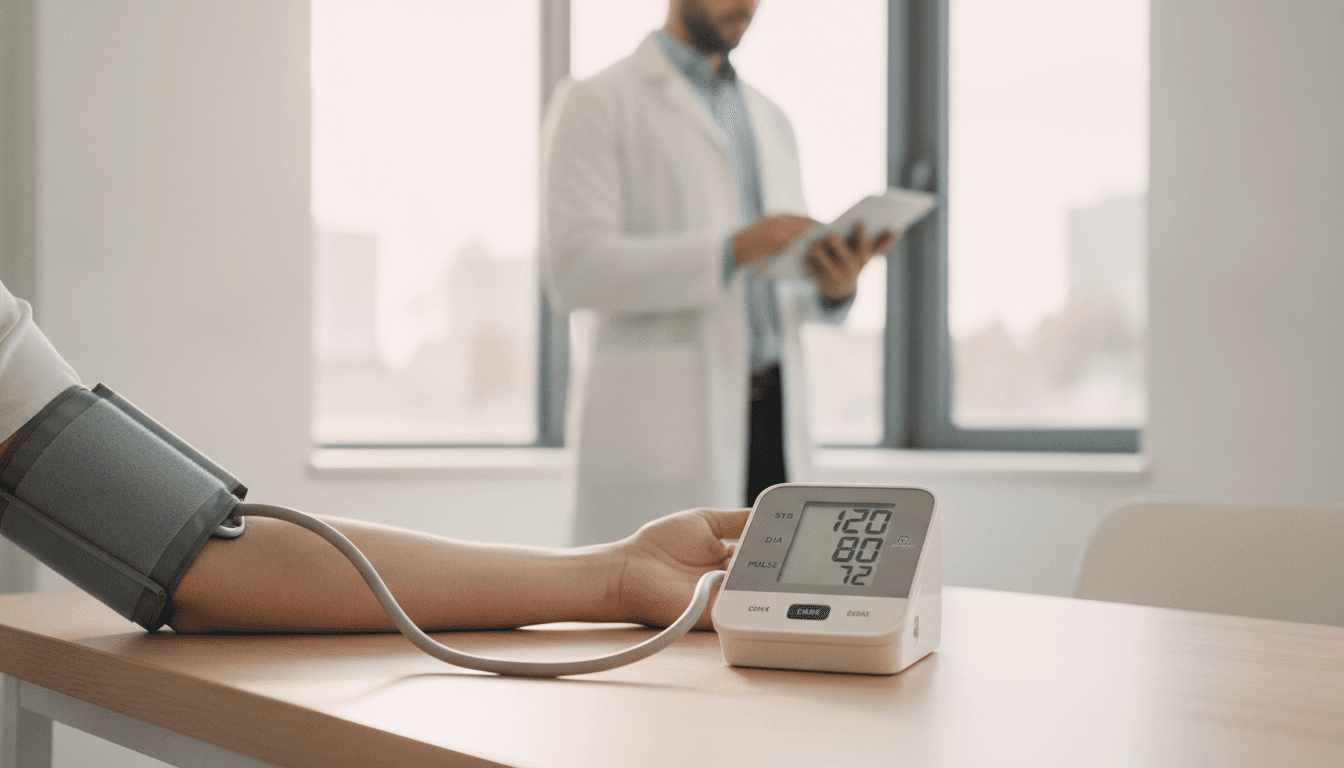
Mark walked into our office at 41 because his employer's open enrollment finally pushed him to use the physical that had been sitting in his benefits packet for three years. He felt fine. He ran twice a week, slept seven hours, drank "not a lot" on weekends. His blood pressure that morning read 156/96. His A1c came back at 6.3%. His LDL was 178. None of it was hurting yet. All of it was already on the runway to hurt.
That visit cost him about an hour. The five years he would have spent racking up undiagnosed cardiovascular risk would have cost him his fifties.
This is the case for the annual physical, even when, especially when, you feel fine. The diseases that shorten American adult lives are quiet for years before they shout [5]. By the time you can feel them, you are usually treating, not preventing. What follows is what an annual physical actually does, what the evidence says is worth checking, what to skip, and how a concierge model changes the experience without changing the science.
What an annual physical actually is
An annual physical is a structured, scheduled visit dedicated to one question: how is your health on the trajectory it is on, and what would change that trajectory for the better?
A real annual physical includes:
- A focused medical history (your conditions, your family's, your meds, what has changed in 12 months)
- A lifestyle and behavior review (sleep, alcohol, tobacco, exercise, diet, stress, sexual health, mental health)
- A vitals check (blood pressure, heart rate, weight, BMI or waist circumference)
- A targeted physical exam
- Age and risk-appropriate screenings
- A written plan
It is not the same as an episodic sick visit. It is not the same as a Medicare Annual Wellness Visit, which is more of a structured check-in than a full exam [9]. And it is not a battery of every test on the menu. The U.S. Preventive Services Task Force (USPSTF) is clear that more is not better: tests with no evidence of benefit can produce false positives, downstream procedures, and anxiety [1][10].
The point is not maximum testing. It is the right testing for you, this year, with someone who knows your story.
Why "feeling fine" is the most dangerous moment
The big four chronic diseases driving early death and disability in the United States, heart disease, cancer, type 2 diabetes, and chronic respiratory disease, all start silent [5]. You usually cannot feel:
- Stage 1 or 2 hypertension
- Pre-diabetes or early type 2 diabetes
- Elevated LDL or non-HDL cholesterol
- Early kidney disease
- Many early cancers
- Early thyroid dysfunction
- A growing AAA (abdominal aortic aneurysm) in a former smoker
The CDC's most recent national data shows that 47.7% of U.S. adults have hypertension, and only about 59% are even aware of it [6]. Roughly one in three U.S. adults has prediabetes, and the majority do not know [7]. These conditions are not rare. They are the default state of midlife American health, and they do not announce themselves.
"Feeling fine" usually means: my blood pressure has not yet caused a stroke, my arteries have not yet narrowed enough to cause chest pain, my pancreas has not yet given up. Those are not reassurances. Those are timelines.
Who is at higher risk and needs to be more aggressive about visits
Standard guidance assumes "average risk." Several conditions make you not average:
- A first-degree relative with early heart disease, diabetes, or cancer
- High blood pressure, even borderline, in your 20s or 30s
- A BMI above 30, or a waist circumference above 40 inches (men) or 35 inches (women)
- Past or current smoking
- More than 1 to 2 alcoholic drinks per day
- A history of preeclampsia, gestational diabetes, or pregnancy loss
- Sedentary work plus minimal cardio
- Chronic poor sleep, severe stress, or untreated depression or anxiety
- Long-term medications with metabolic effects (steroids, atypical antipsychotics, some HIV regimens)
If any of these apply, "I feel fine" is even less reliable as a guide. You need an annual visit, and you may need a more aggressive screening cadence than the population default.
What evidence-based guidelines actually recommend
This is where most patients are surprised. The annual physical is not, despite what waiting-room posters suggest, a fixed checklist. Here is what high-quality bodies actually recommend for a generally healthy adult [1].
Blood pressure: Screen all adults at every visit. Confirm elevated readings out of office (home cuff, ambulatory monitor) before diagnosing hypertension. The 2025 AHA/ACC guideline classifies stage 1 hypertension as 130/80 or above and pushes earlier lifestyle and pharmacologic intervention in higher-risk adults [2][8].
Lipids: Most adults should have a fasting or non-fasting lipid panel by the late 20s, with frequency based on risk. Guidelines recommend repeating roughly every 4 to 6 years if low risk, more often if elevated.
Diabetes / prediabetes: USPSTF recommends screening for prediabetes and type 2 diabetes in adults aged 35 to 70 who are overweight or obese, with most clinicians starting earlier in higher-risk patients [1].
Colorectal cancer: Screening starts at age 45 for average-risk adults [3]. Options include colonoscopy, stool-based tests like FIT or Cologuard, or CT colonography.
Lung cancer: Annual low-dose CT for adults 50 to 80 with a 20 pack-year smoking history who currently smoke or quit within 15 years [4].
Cervical cancer: Pap and/or HPV co-testing per USPSTF schedule for women 21 to 65.
Breast cancer: Mammography starting at 40 for average-risk women, every 1 to 2 years [1].
AAA: One-time ultrasound for men 65 to 75 who have ever smoked.
Hepatitis C and HIV: One-time HCV screening for adults 18 to 79; HIV screening for adolescents and adults 15 to 65.
Osteoporosis: DEXA scan for women 65 and older, earlier if risk factors.
Mental health: Screen all adults for depression and anxiety at routine visits.
Tobacco, alcohol, sexual health, intimate partner violence, healthy weight, physical activity: Counseling and screening at every annual visit.
A real provider also asks about sleep, stress, energy, libido, GI symptoms, and skin changes, things no algorithm flags but every clinician should hear.
What a high-quality annual visit actually looks like
A good annual physical is not 12 minutes of "any concerns?" and a handshake. Done well, it has shape:
Pre-visit work. Your labs and history should be reviewed before you sit down. At NoMi Beach Health, we send labs out 1 to 2 weeks ahead of your visit so we can talk about real numbers, not draft assumptions.
The conversation. Twenty to thirty minutes of actual talking. This is where most diagnoses get made, not in the exam, not in the lab. We ask about energy, sleep onset and quality, mid-night wake-ups, libido, mood, focus, gut, joint pain, exercise tolerance, alcohol pattern, screen and stress load, work, and relationships. The story is usually more diagnostic than the data.
The exam. Vitals (with both arms if there is concern), heart and lung auscultation, abdominal exam, lymph nodes, thyroid, skin survey, and a focused musculoskeletal or neuro check based on your story. Targeted exam beats reflex hammer theater.
The plan. A written, prioritized plan: 1) what is normal and we can leave alone, 2) what is borderline and we are watching with a target, 3) what needs treatment now, 4) what we are screening or referring for, 5) what you are working on between now and the next visit. You should leave with a copy.
The follow-through. Lab results explained line by line, not just "everything is normal." Specialist referrals coordinated, not handed off. Medications reconciled.
If your annual physical does not include those five pieces, you are getting a check-the-box visit, not preventive care.
What to bring with you
A productive annual visit starts before you walk in:
- Your current medication list, supplements, and doses
- Any home blood pressure or glucose readings from the past 60 to 90 days
- A real-world food and alcohol log of one typical week
- Your sleep tracker data if you have it
- A 1-page list of symptoms and questions ranked by what bothers you most
- Vaccine and screening history if your records are not consolidated
- Family history updates (any new diagnoses, including parents and siblings)
The patients who get the most out of an annual visit are the ones who treat it like a meeting, not an appointment.
How the NoMi Beach Health concierge model changes the experience
The science of preventive care is the same whether you see a 10-minute insurance-driven primary care provider or a concierge physician. What changes is what is humanly possible inside the visit.
In our concierge model, your annual physical is 60 to 90 minutes. Labs are reviewed in advance, results are sent in writing, and your plan ties directly to your goals (longevity, performance, weight, mood, hormones, fertility, whatever those are for you). Same-week follow-up is the norm, not the exception. Telehealth is built in for the parts of care that do not need an exam room: results review, medication adjustments, mental health check-ins.
We also coordinate the parts most patients fall through the cracks on: getting your colonoscopy actually scheduled, getting your derm referral seen, getting cardiology involved early when something is borderline.
The idea is simple. Evidence-based primary care, with the time it actually takes to do well.
When to come in sooner than your annual
Even with an annual on the calendar, do not wait twelve months if you notice:
- New chest pain, shortness of breath, or palpitations
- Unexplained weight loss of more than 5 to 10 pounds
- New persistent fatigue, brain fog, or low mood lasting 2+ weeks
- Blood pressure repeatedly above 135/85 at home
- A new mole, lump, or skin change
- Persistent abdominal pain, change in bowel habits, or rectal bleeding
- New erectile dysfunction or libido drop
- Hot flashes, irregular cycles, or menopause symptoms affecting life
- Persistent insomnia or 3 a.m. wake-ups for more than 2 to 3 weeks
These are not "wait and see" symptoms. They are reasons to message your provider this week.
The bottom line
Feeling fine is a snapshot. Health is a trajectory. The job of an annual physical is to take a careful look at the slope you are on and, if it is heading somewhere you do not want to go, change it while it is still cheap and easy to change. The price of skipping it for a decade is not zero. It is whatever your fifties end up looking like.
If you are due for a comprehensive annual physical and want one done in 60 to 90 minutes, with labs reviewed in writing and a real plan you can act on, our team at NoMi Beach Health is here. Book your annual exam, and we will spend the time it actually takes to do this well.
Frequently Asked Questions
- I feel completely fine. Do I really need an annual physical?
- Most chronic conditions that shorten life (high blood pressure, type 2 diabetes, high cholesterol, early kidney disease, certain cancers) are silent in their early stages. The point of an annual visit is not to confirm you feel fine. It is to catch the things you cannot feel yet, when they are still cheap and easy to fix.
- What labs should be done at an annual physical?
- For an average-risk adult, most providers run a CBC, comprehensive metabolic panel, lipid panel, hemoglobin A1c or fasting glucose, TSH, and a urinalysis. Risk-based add-ons may include vitamin D, ferritin, hs-CRP, hepatitis C, HIV, and STI screening. Men over 40 to 45 may add PSA after a shared decision-making conversation.
- Does insurance cover an annual physical?
- Most commercial and ACA plans cover a preventive annual visit at no cost-sharing when it is coded as preventive and the screenings follow USPSTF A and B recommendations. Be aware: if you bring up a new problem or your provider treats an active condition during the same visit, a separate office-visit charge can apply. Ask your office how they bill.
- How is a concierge annual physical different from a standard one?
- Time and depth. A typical primary care annual is 15 to 30 minutes. A concierge annual at NoMi Beach Health is 60 to 90 minutes, includes labs reviewed line by line, a metabolic and cardiovascular risk assessment, and a written plan. Same evidence base, more bandwidth to explain it.
- Can an annual physical be done by telehealth?
- Parts of it, yes. History, medication review, mental health screening, lifestyle counseling, and lab ordering all work well by telehealth. Vital signs and a focused exam still need a hands-on visit, so most patients pair an in-person physical with telehealth follow-ups for results and adjustments.
- I am in my 30s and healthy. How often should I really come in?
- If you are an average-risk adult under 40 with normal vitals and labs, every one to two years is reasonable for a comprehensive visit, with shorter touchpoints if anything is off. Once you cross 40, or if you have any chronic condition or family history, annually is the standard.
Sources
- U.S. Preventive Services Task Force. A and B Recommendations (Current List).
- Davidson KW, et al. Screening for Hypertension in Adults: USPSTF Reaffirmation Recommendation Statement. JAMA (2021).
- Davidson KW, et al. Screening for Colorectal Cancer: USPSTF Recommendation Statement. JAMA (2021).
- Krist AH, et al. Screening for Lung Cancer: USPSTF Recommendation Statement. JAMA (2021).
- Centers for Disease Control and Prevention. About Chronic Diseases.
- Centers for Disease Control and Prevention. Hypertension Prevalence Among Adults Aged 18 and Over, August 2021 to August 2023. NCHS Data Brief No. 511 (2024).
- Centers for Disease Control and Prevention. National Diabetes Statistics Report.
- American Heart Association / American College of Cardiology. 2025 Guideline for the Prevention, Detection, Evaluation, and Management of High Blood Pressure in Adults.
- Mayo Clinic. Health Screening Guidelines: What Adults Need.
- Liss DT, et al. General Health Checks in Adult Primary Care: A Review. JAMA (2021).