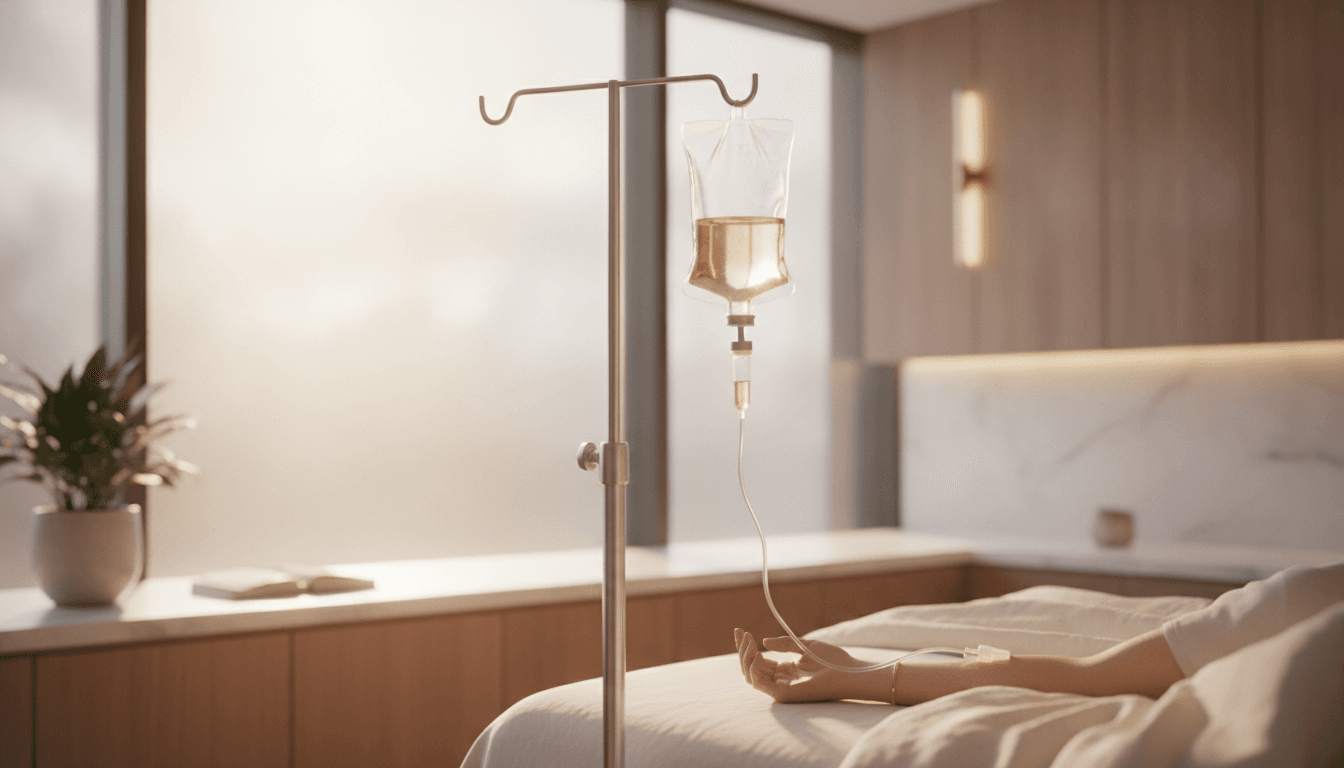
Depression that has survived two or three antidepressant trials, anxiety that lives underneath every productive day, PTSD that does not respond to the usual first-line treatments -- these are not rare problems. They are the kind of problems that send people searching far outside conventional care. Ketamine has moved to the center of that search, and a large 2025 real-world observational study now gives us the most detailed look yet at what happens when subcutaneous ketamine is delivered at home, supported by telehealth monitoring.
What the data actually show is more nuanced than either the advocates or the skeptics tend to admit. Here is an honest read.
What the 2025 study actually measured
The study published in the Journal of Clinical Psychiatry in 2025 followed a large, heterogeneous cohort of adults in the United States who received at-home subcutaneous ketamine therapy supported by telehealth check-ins (https://pubmed.ncbi.nlm.nih.gov/42319752/). The population included people with moderate to severe depression, anxiety, and PTSD -- not cherry-picked research volunteers but the kind of complex, real-world patients who cycle through psychiatric care without getting better.
The headline findings were meaningful. Across validated symptom scales, participants showed significant reductions in depression and anxiety scores from baseline. PTSD measures moved in the same direction. Serious adverse events were uncommon. The authors concluded that this model -- home administration, subcutaneous route, telehealth oversight -- appeared feasible and reasonably safe in a carefully screened population.
Those findings matter. But a few things about the design deserve equal attention. This was an observational study, not a randomized controlled trial. There was no placebo group. People who choose ketamine therapy and stick with a telehealth protocol are not a random sample of the depressed population -- they tend to be motivated, able to navigate technology, and willing to pay out of pocket. All of that can inflate apparent response rates. The study is a strong signal, not a verdict.
How subcutaneous ketamine differs from IV ketamine
If you have read anything about ketamine for depression, you have probably read about IV infusions in a clinic. That model has the most accumulated evidence behind it. A 2013 randomized controlled trial in the American Journal of Psychiatry showed significant antidepressant effects from a single IV dose compared to an active placebo, with response appearing within 24 hours (https://pubmed.ncbi.nlm.nih.gov/23982301/). That speed -- hours to days instead of weeks -- is what separates ketamine from every SSRI or SNRI on the market.
Subcutaneous delivery changes the pharmacokinetics. When ketamine is injected just under the skin rather than directly into a vein, absorption is slower and peak plasma levels are lower. That blunts the dissociative experience, which is one reason it is considered more manageable outside a clinical setting. The trade-off is that bioavailability is somewhat lower and the dose-response relationship is less predictable across individuals.
Neither route is FDA-approved for depression in this form -- that distinction belongs to esketamine (Spravato), a nasal-spray formulation approved in 2019 for treatment-resistant depression that must be administered in a certified healthcare setting (https://www.fda.gov/news-events/press-announcements/fda-approves-new-nasal-spray-medication-treatment-resistant-depression-available-only-certified). IV and subcutaneous racemic ketamine are off-label uses supported by a growing body of peer-reviewed evidence, not a regulatory imprimatur. That is a real distinction worth understanding before you start any protocol.
Why treatment-resistant cases are the target population
Ketamine is not a first-line antidepressant, and responsible prescribers do not treat it as one. Standard antidepressants -- SSRIs, SNRIs, bupropion -- work on the serotonin and norepinephrine systems. They help a meaningful portion of people with depression, and they are where evidence-based psychiatric care starts. The problem is that roughly 30% of people with major depressive disorder do not respond adequately to two or more antidepressant trials, a category clinicians call treatment-resistant depression (TRD).
Ketamine works on a different system entirely. It is an NMDA receptor antagonist that modulates glutamate signaling -- the most abundant excitatory neurotransmitter in the brain. A 2015 review in Annual Review of Medicine outlined how this mechanism appears to rapidly restore synaptic plasticity in prefrontal circuits that are suppressed in depression (https://pubmed.ncbi.nlm.nih.gov/25341005/). More recent sleep research published in 2025 showed that ketamine modulates slow wave activity in non-REM sleep in people with treatment-resistant depression -- a finding that may partially explain its rapid mood effects (https://pubmed.ncbi.nlm.nih.gov/42304135/).
For PTSD specifically, a 2021 randomized controlled trial in JAMA Psychiatry found that repeated IV ketamine infusions produced significantly greater PTSD symptom reduction than a midazolam control at two weeks (https://pubmed.ncbi.nlm.nih.gov/33439212/). The 2025 real-world study extends that signal to a larger and more varied population in a home setting.
What this means practically: if you are exploring ketamine because one antidepressant did not work, you are probably not the right candidate yet. If you have worked through an adequate psychiatric evaluation, tried appropriate first-line treatments, and you are still not better -- that is the conversation worth having.
What a responsible at-home protocol looks like
The feasibility findings in the 2025 study did not come from mailing ketamine to anyone who filled out a web form. The model that produced reasonable safety outcomes involved several components that are easy to skip and dangerous to skip.
First, careful patient screening. Contraindications to ketamine are real. A history of schizophrenia or bipolar I, uncontrolled hypertension, active dissociative substance use disorder, significant hepatic impairment, and pregnancy are reasons to stop the conversation before it starts. A 2017 consensus statement in JAMA Psychiatry from leading ketamine researchers laid out these guardrails clearly, and they have not changed (https://pubmed.ncbi.nlm.nih.gov/28249076/).
Second, baseline blood pressure and cardiovascular assessment. Ketamine transiently raises heart rate and blood pressure. In a healthy, normotensive person this is manageable. In someone with uncontrolled hypertension, it is a genuine risk that requires a real clinical workup -- not a checkbox.
Third, a responsible person present during administration. At-home does not mean alone. The dissociative effects of subcutaneous ketamine, even at lower doses, can produce disorientation, perceptual changes, and occasionally anxiety. Having another adult present is not optional in any reputable protocol.
Fourth, telehealth check-ins before, during, and after dosing. The telehealth component in the 2025 study was not decorative -- it was the mechanism by which the clinical team monitored blood pressure, assessed dissociative symptoms, and intervened when something looked wrong. Asynchronous prescribing without real-time monitoring does not replicate that model.
Fifth, integration support. Ketamine's acute effects open a window. What happens in that window -- and what you do with it afterward -- affects how durable the benefit is. Psychotherapy or structured integration support alongside ketamine treatment is associated with better outcomes in the literature on ketamine-assisted care. Our earlier piece on ketamine-assisted psychotherapy practices covers that model in more depth.
The PTSD and anxiety signal -- promising but not settled
The 2025 study included a substantial number of participants with PTSD and anxiety disorders alongside depression, and the symptom reductions in those groups were meaningful. A separate 2025 systematic review found early evidence for ketamine's efficacy in OCD as well, though the evidence base there is considerably thinner and the heterogeneity across studies was high (https://pubmed.ncbi.nlm.nih.gov/42311186/).
This is a pattern worth naming honestly. Ketamine's mechanism -- rapid glutamate modulation, restoration of synaptic plasticity, possible fear-memory reconsolidation effects -- gives it theoretical relevance across a range of anxiety-spectrum conditions. The clinical evidence for depression is the most mature. The evidence for PTSD is building, with controlled trial support. The evidence for generalized anxiety disorder and OCD is suggestive but early. That gradient matters when you are deciding whether to pursue treatment, and it matters when you are evaluating the claim that ketamine treats essentially everything in the mental health category.
If you are managing more than one of these conditions -- which is common, since depression, anxiety, and PTSD frequently co-occur -- the picture gets more complicated, not simpler. That complexity is part of why a real psychiatric and medical evaluation is the starting point, not a symptom quiz.
For context on how we think about mental health evaluation and treatment at NBH more broadly, our high-performer mental health guide covers the full landscape, including when medication, therapy, and integrative approaches each belong in the conversation.
What we look for before recommending this path
At NoMi Beach Health, Dr. Jezwah Harris (NP, JD, MBA, FNP-BC, MEP-C) approaches ketamine evaluation the way she approaches any complex clinical question -- with the full picture first. That means a thorough intake, a review of prior treatment history (what was tried, at what dose, for how long), a cardiovascular baseline, a mental health history that goes back far enough to assess bipolar risk, and a real conversation about what you are hoping for and what the evidence can reasonably promise.
We do not offer ketamine to every person who asks for it, and we do not apologize for that. The 2025 real-world data are encouraging precisely because the population in that study was screened carefully. Replicating the results requires replicating the care.
If you are not a candidate -- because your symptoms are earlier-stage, because a reversible cause has not been ruled out, or because the risk profile is not right -- we will tell you that directly and tell you what comes next. If you are a candidate, we build the protocol around you: the right dose, the right monitoring cadence, integration support built in, and a clear plan for evaluating whether it is working.
The science on at-home subcutaneous ketamine has moved far enough that dismissing it is no longer scientifically honest. The science has not moved far enough that treating it as a guaranteed fix for any mental health condition is honest either. The honest place is in between -- and that is where we work.
The next step, if this sounds like your situation
If you have been through the standard treatment process for depression, anxiety, or PTSD and you are not where you want to be, ketamine therapy may be worth a serious conversation. If you are curious but earlier in the process, that conversation is still worth having -- because knowing whether you are a candidate and what the realistic expectations are is useful information regardless of what you decide.
Visit our mental health services page to learn how we approach evaluation and treatment at NBH, or call us at (786) 744-5152 to ask whether a new-patient visit makes sense for where you are right now. We will give you a straight answer.
Frequently Asked Questions
- Is at-home ketamine therapy safe without in-person monitoring?
- The largest real-world study to date found serious adverse events were rare when patients were screened carefully and monitored via telehealth. That said, safety depends heavily on proper patient selection -- people with uncontrolled blood pressure, a history of psychosis, or active substance use disorder are generally excluded. No at-home protocol replaces clinical judgment before and during treatment.
- What is the difference between IV ketamine and subcutaneous ketamine?
- IV ketamine delivers the drug directly into the bloodstream and is given in a clinic. Subcutaneous ketamine is injected just under the skin, which slows absorption and produces a slightly lower peak plasma level, making it more manageable outside a monitored clinical setting. Both are off-label uses of the same molecule for depression and PTSD.
- How quickly does ketamine work for depression?
- Clinical response can appear within hours to days, which is one of the reasons ketamine is studied for treatment-resistant cases where standard antidepressants have not worked after weeks. However, durability varies -- many patients need a series of treatments and occasional maintenance doses to sustain benefit.
- Can ketamine help with PTSD as well as depression?
- Emerging evidence suggests yes, though the PTSD data are less mature than the depression data. The 2025 real-world observational study cited in this post included a significant PTSD cohort and found meaningful symptom reductions. Ongoing randomized trials are needed before PTSD becomes a guideline-supported indication.
- Is ketamine FDA-approved for depression?
- Esketamine (Spravato) -- a nasal-spray formulation of one ketamine enantiomer -- is FDA-approved for treatment-resistant depression and major depressive disorder with suicidal ideation, but must be administered in a certified healthcare setting. Racemic IV or subcutaneous ketamine for depression remains off-label, meaning clinicians prescribe it based on evidence but it does not carry an official FDA depression indication.
- What symptoms or conditions might make someone a poor candidate for ketamine?
- Clinicians generally avoid ketamine in people with a personal or family history of schizophrenia or bipolar I, uncontrolled hypertension, active substance use disorder involving dissociatives, severe liver disease, or pregnancy. A thorough intake evaluation -- not a quick online form -- is what separates responsible prescribing from risky prescribing.
- How does ketamine compare to standard antidepressants?
- Standard antidepressants like SSRIs work on the serotonin system and typically take four to eight weeks to show effect. Ketamine works primarily on the glutamate system through NMDA receptor antagonism and can produce measurable mood changes within 24 hours. It is generally reserved for cases where one or more antidepressants have already failed, rather than as a first-line treatment.
Sources
- Levine SP, et al. At-Home Telehealth-Supported Subcutaneous Ketamine Therapy in Adults With Moderate to Severe Depression, Anxiety, or PTSD: A Real-World Observational Study of Safety, Feasibility, and Clinical Outcomes in a Large, Heterogeneous Cohort in the United States. J Clin Psychiatry (2025).
- Zhdanava M, et al. Ketamine for the Treatment of Obsessive-Compulsive Disorder (OCD): A Systematic Review on Efficacy and Tolerability. J Clin Psychopharmacol (2025).
- Vasavada MM, et al. Modulation of early non-rapid eye movement slow wave activity by ketamine in treatment-resistant depression. Neuropsychopharmacology (2025).
- Abdallah CG, et al. Ketamine and Rapid-Acting Antidepressants: A Window into a New Neurobiology for Mood Disorder Therapeutics. Annu Rev Med (2015).
- Daly EJ, et al. Efficacy and Safety of Intranasal Esketamine Adjunctive to Oral Antidepressant Therapy in Treatment-Resistant Depression: A Randomized Clinical Trial. JAMA Psychiatry (2018).
- Feder A, et al. Efficacy of Intravenous Ketamine for Treatment of Chronic Posttraumatic Stress Disorder: A Randomized Clinical Trial. JAMA Psychiatry (2021).
- Murrough JW, et al. Antidepressant Efficacy of Ketamine in Treatment-Resistant Major Depression: A Two-Site Randomized Controlled Trial. Am J Psychiatry (2013).
- Aan het Rot M, et al. Safety and Efficacy of Repeated-Dose Intravenous Ketamine for Treatment-Resistant Depression. Biol Psychiatry (2010).
- US Food and Drug Administration. FDA approves new nasal spray medication for treatment-resistant depression. FDA News Release (2019).
- Sanacora G, et al. A Consensus Statement on the Use of Ketamine in the Treatment of Mood Disorders. JAMA Psychiatry (2017).