Depression that does not respond to two or more standard antidepressants used to mean a very short menu of next steps: try another medication, add a second drug, consider electroconvulsive therapy, wait. Ketamine changed that math. What started as an anesthetic used in operating rooms turned out -- almost by accident -- to lift depression within hours in some people who had spent years getting nowhere. That discovery has since moved from academic curiosity to clinical reality, and the most recent research suggests the compound works best not as a standalone infusion but as one piece of a structured therapeutic process.
This post covers what ketamine-assisted psychotherapy (KAP) actually is, what the evidence supports, how sessions are structured in practice, who tends to benefit, and where the field is honestly heading -- including the parts that still need more data.
What KAP is, and why it is not the same as a ketamine infusion
Ketamine infusion clinics have multiplied rapidly across the country. Many offer a series of six IV infusions over two to three weeks, with little to no formal psychotherapy attached. Results can be dramatic in the short term. The problem is that the antidepressant effect of a ketamine infusion alone tends to fade within one to two weeks for many people, and without a framework for processing and applying the experience, the clinical benefit often does not stick.
Ketamine-assisted psychotherapy adds structure around the drug experience. A 2025 survey of clinicians actively practicing KAP found that the majority conduct preparatory therapy sessions before the first dosing session, provide therapist presence during the ketamine experience itself, and then hold integration sessions in the days immediately following -- when the brain appears to remain in a heightened state of plasticity (https://pubmed.ncbi.nlm.nih.gov/42272233/). The rationale is that ketamine temporarily loosens rigid patterns of thought and behavior, and that window is more useful when a therapist is there to help you work with it.
The distinction matters clinically. KAP is a hybrid model. It requires coordination between a prescribing clinician who monitors medical safety and a therapist who guides the psychological process. That coordination is one of the reasons it is not yet universally available -- and one of the reasons standardization is an active area of debate in the field.
How ketamine works on a depressed brain
Most antidepressants work on serotonin, norepinephrine, or dopamine. Ketamine does something different. It is a non-competitive antagonist of the NMDA receptor -- a receptor that uses glutamate, the brain's main excitatory neurotransmitter. Blocking that receptor triggers a rapid downstream release of brain-derived neurotrophic factor (BDNF), which promotes the growth of new synaptic connections (https://pubmed.ncbi.nlm.nih.gov/31408590/).
In plain terms: ketamine appears to help a brain that has become structurally rigid -- fewer synaptic connections, less flexibility -- rebuild some of that connectivity quickly. Research using imaging and cell models has shown that ketamine and related compounds can promote dendritic spine growth within hours (https://pubmed.ncbi.nlm.nih.gov/29898397/). This is likely why the antidepressant effect can appear so fast compared to SSRIs, which require weeks of receptor-level adaptation.
The dissociative or psychedelic-like experience -- the altered perception of time, mild visual distortions, sense of detachment -- appears to be a separate phenomenon from the antidepressant effect, though how much it contributes to therapeutic outcomes in KAP is still under active investigation. Some researchers believe the subjective experience itself is therapeutically meaningful; others argue the neuroplasticity window is the primary mechanism and the altered state is largely incidental.
What the evidence actually shows
The strongest evidence base for ketamine in depression covers two distinct populations: people with treatment-resistant depression (TRD) -- defined as failure of at least two adequate antidepressant trials -- and people with major depressive disorder who are acutely suicidal.
A two-site randomized controlled trial published in the American Journal of Psychiatry found that a single IV ketamine infusion produced response rates of 64% versus 28% for midazolam (an active control) in people with treatment-resistant major depression, with effects measurable at 24 hours (https://pubmed.ncbi.nlm.nih.gov/23982301/). A systematic meta-analysis of data on suicidal ideation found consistent, rapid reductions following a single infusion across multiple studies (https://pubmed.ncbi.nlm.nih.gov/29073779/).
For esketamine -- the S-enantiomer of racemic ketamine, branded as Spravato -- a pivotal trial demonstrated significant antidepressant effects over eight weeks in TRD when combined with a newly started oral antidepressant (https://pubmed.ncbi.nlm.nih.gov/31109201/). A 2025 real-world multicenter study followed esketamine patients for six months and found meaningful improvements in functional outcomes, not just symptom scores -- though not every patient maintained full response, and the authors noted that durability varied considerably (https://pubmed.ncbi.nlm.nih.gov/42266089/).
For KAP specifically -- where psychotherapy is formally integrated -- the evidence base is smaller but growing. The 2025 survey of practicing KAP clinicians documented a range of approaches, reflecting that the field has not yet converged on a single protocol. That is both a limitation and an honest reflection of where clinical science is: the evidence supports the components individually; the optimal way to combine them is still being worked out.
Who is and is not a candidate
KAP is not right for every patient, and a practice that presents it as a universal solution is not practicing good medicine.
What clinicians look for in a candidate includes: a confirmed diagnosis of major depressive disorder or treatment-resistant depression, documented failure of at least two adequate antidepressant trials (for TRD designation), medical clearance for mild blood pressure elevation during infusion, and psychological readiness to engage with the therapy component. Some patients with bipolar depression are considered -- there is emerging data on combined approaches including one recent case series examining ketamine alongside electroconvulsive therapy in bipolar I and II (https://pubmed.ncbi.nlm.nih.gov/42267236/) -- but bipolar requires especially careful evaluation given the theoretical risk of triggering a manic episode.
Contraindications that clinicians take seriously include: uncontrolled hypertension, active psychosis or a first-degree family history of schizophrenia or schizotypal disorder, active stimulant or dissociative substance use, certain cardiac arrhythmias, and pregnancy. A history of substance use disorder does not automatically disqualify someone, but it changes the risk-benefit conversation significantly and requires more careful monitoring.
If you are curious whether this approach might be relevant to your situation, our mental health services page walks through the evaluation process we use. You may also find it useful to read our high-performer mental health guide for a broader look at how we think about mental health in high-functioning people who are struggling despite appearing to hold things together.
How a KAP protocol is structured in practice
There is no single universally adopted protocol, but the structure that has the most clinical support -- and that the 2025 survey found most experienced practitioners use -- follows a three-phase model.
Preparation. Before any ketamine is administered, you meet with a therapist for one to three sessions. The goals are practical and psychological: set intentions for the experience, discuss what to expect, address fears, identify the thought patterns or emotional material you most want to work with. This is not a formality. Patients who come into their first dosing session with no preparation tend to have a more disorienting and less therapeutically useful experience.
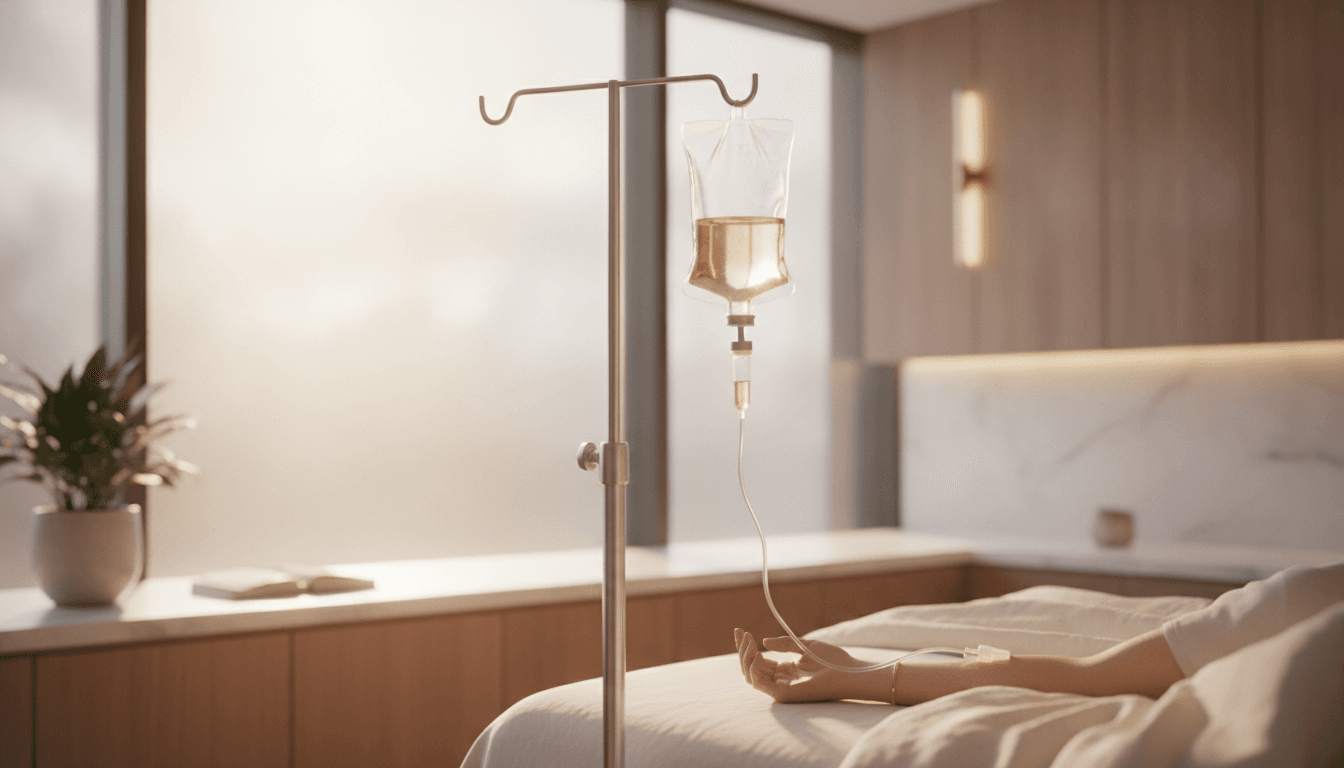
Dosing sessions. Most protocols involve six infusions over two to three weeks. The therapist is present during the infusion itself -- not directing a therapy session while you are dissociating, but providing a calm, grounding presence and occasionally guiding attention. Heart rate, blood pressure, and oxygen saturation are monitored throughout. Each infusion typically lasts 40 to 60 minutes, with a recovery period afterward before you leave (you cannot drive). A series of six sessions does not mean six separate medical appointments -- each one includes clinical monitoring, therapist time, and a structured post-session check-in.
Integration. This is arguably where the therapeutic work happens. In the 24 to 72 hours after each infusion, the brain appears to remain in a more flexible, receptive state. Integration therapy sessions -- typically 60 to 90 minutes -- are scheduled to take advantage of that window. You process what came up during the experience: imagery, emotions, memories, insights. The therapist helps you translate those raw experiences into changes in how you think and behave outside the treatment room. Without integration, many people find the experiences interesting but not durably life-changing.
Honest limits and what comes next
The field is advancing, but several questions remain genuinely open. We think it is worth naming them.
Durability is the biggest one. The antidepressant effect of ketamine can fade. Most people who respond well to an induction series will need some combination of maintenance infusions, ongoing psychotherapy, or concurrent medication to sustain gains. How often, and for how long, is not yet well-defined by randomized controlled data -- current practice is largely guided by clinical judgment and patient response.
Standardization is another. The 2025 survey found wide variation in how KAP is delivered: different doses, different infusion routes, different therapy models, different amounts of therapist contact during dosing. That is partly because the field is young and partly because insurance rarely covers it, which limits the large trials that would generate tighter protocols. Until reimbursement structures change, KAP will remain primarily cash-pay and variably practiced.
Long-term safety data on repeated ketamine exposure is still accumulating. The dissociative and potential for misuse are real considerations. High-frequency use -- more than what a structured clinical protocol involves -- carries documented risks to the bladder and liver. Within a properly managed clinical protocol, these risks are low, but they are not zero, and a clinician who does not mention them is not being straight with you.
If you are dealing with ADHD alongside depression -- a common pairing -- you may also want to review our post on ADHD evaluation and treatment for adults, since untreated ADHD can look like, worsen, or be misdiagnosed as depression.
The bottom line
Ketamine-assisted psychotherapy represents one of the most meaningful clinical developments in depression treatment in decades -- not because it is a cure, but because it offers rapid relief for people who have not responded to standard approaches, and because the integration of structured psychotherapy appears to make that relief more durable than infusion alone.
The evidence supports using it in treatment-resistant depression and in acute suicidal crisis. It does not support using it as a first-line treatment for mild depression, as a substitute for careful psychiatric evaluation, or without a trained therapist involved in the process. The clinics that skip the hard parts are not offering you a better product -- they are offering you less.
If you have tried two or more antidepressants without meaningful relief, or if you are looking for a clinician who will evaluate KAP as part of a thoughtful, evidence-based mental health plan rather than as a transaction, we want to talk with you.
Book a mental health evaluation at NoMi Beach Health or call us at (786) 744-5152. Dr. Jezwah Harris will review your history, your prior treatment, and your goals before recommending anything -- including whether KAP is actually the right next step for you.
Frequently Asked Questions
- What is ketamine-assisted psychotherapy (KAP)?
- KAP pairs a sub-anesthetic dose of ketamine -- given by IV infusion, intramuscular injection, or intranasal spray -- with structured psychotherapy sessions before, during, and after the drug experience. The idea is that ketamine opens a window of neuroplasticity that therapy can use to help you build new patterns of thought. It is not just ketamine infusion alone, and it is not just talk therapy alone.
- Is ketamine FDA-approved for depression?
- Esketamine (Spravato), the intranasal formulation, is FDA-approved for treatment-resistant depression and for major depressive disorder with acute suicidal ideation. IV racemic ketamine is used off-label for depression. Off-label use is legal and clinically common, but it means there is no approved labeling to guide exact dosing or duration.
- How quickly does ketamine work for depression?
- Many people notice mood improvement within hours to days of their first infusion -- far faster than traditional antidepressants, which typically take two to four weeks. That speed is one of the main reasons ketamine is used in patients with acute suicidal ideation. However, the antidepressant effect often fades within days to weeks without repeated sessions or a maintenance plan.
- Who is not a good candidate for KAP?
- Clinicians generally avoid KAP in people with active psychosis, uncontrolled hypertension, a personal or first-degree family history of schizophrenia, active substance use disorder (particularly stimulants or dissociatives), or certain cardiac conditions. Pregnancy is also a contraindication. A thorough medical and psychiatric intake is required before any protocol begins.
- How many sessions does a typical KAP protocol involve?
- Most initial protocols studied in research involve six infusions over two to three weeks, often called an induction series. Psychotherapy is woven in before the first session, immediately after each dosing session while the brain remains in a more flexible state, and in integration sessions in the days following. Maintenance frequency varies widely by individual response.
- Does ketamine cure depression permanently?
- No -- and any clinic claiming otherwise is overclaiming. The evidence shows rapid symptom reduction that can be durable with ongoing therapy and, in some cases, booster infusions. A 2025 real-world study on esketamine found meaningful functional improvements at six months, but not all patients maintained full response. KAP is a powerful tool, not a permanent fix.
- What does the dissociative experience during infusion actually feel like?
- Most people describe perceptual changes -- altered sense of time, mild visual distortions, a feeling of detachment from the body -- that resolve within 30 to 60 minutes after the infusion ends. The experience varies significantly from person to person and session to session. Being in a calm, supervised clinical environment with a therapist present is associated with better psychological safety and more meaningful integration afterward.
Sources
- Wolfson PE, et al. Ketamine-Assisted Psychotherapy for Depression: A Survey of Current Practices, Rationales, and Future Directions. Front Psychiatry (2025).
- Ochs-Ross R, et al. Functional outcomes with esketamine in treatment-resistant depression: A 6-month multicenter real-world study. J Affect Disord (2025).
- Correia-Melo FS, et al. Efficacy and safety of concomitant use of esketamine and electroconvulsive therapy in treatment-resistant depression. Neuropsychiatr Dis Treat (2021).
- Murrough JW, et al. Antidepressant efficacy of ketamine in treatment-resistant major depression: a two-site randomized controlled trial. Am J Psychiatry (2013).
- Duman RS, Sanacora G, Bhagwagar Z. Altered connectivity in depression: GABA and glutamate neurotransmitter deficits and reversal by novel treatments. Neuron (2019).
- Popova V, et al. Efficacy and Safety of Flexibly Dosed Esketamine Nasal Spray Combined With a Newly Initiated Oral Antidepressant in Treatment-Resistant Depression. Am J Psychiatry (2019).
- Ly C, et al. Psychedelics promote structural and functional neural plasticity. Cell Reports (2018).
- Wilkinson ST, et al. The Effect of a Single Dose of Intravenous Ketamine on Suicidal Ideation: A Systematic Review and Individual Participant Data Meta-Analysis. Am J Psychiatry (2018).
- American Psychiatric Association. Practice Guideline for the Treatment of Patients with Major Depressive Disorder, Third Edition (2010, reaffirmed 2022).
- Aan het Rot M, et al. Safety and Efficacy of Repeated-Dose Intravenous Ketamine for Treatment-Resistant Depression. Biol Psychiatry (2010).