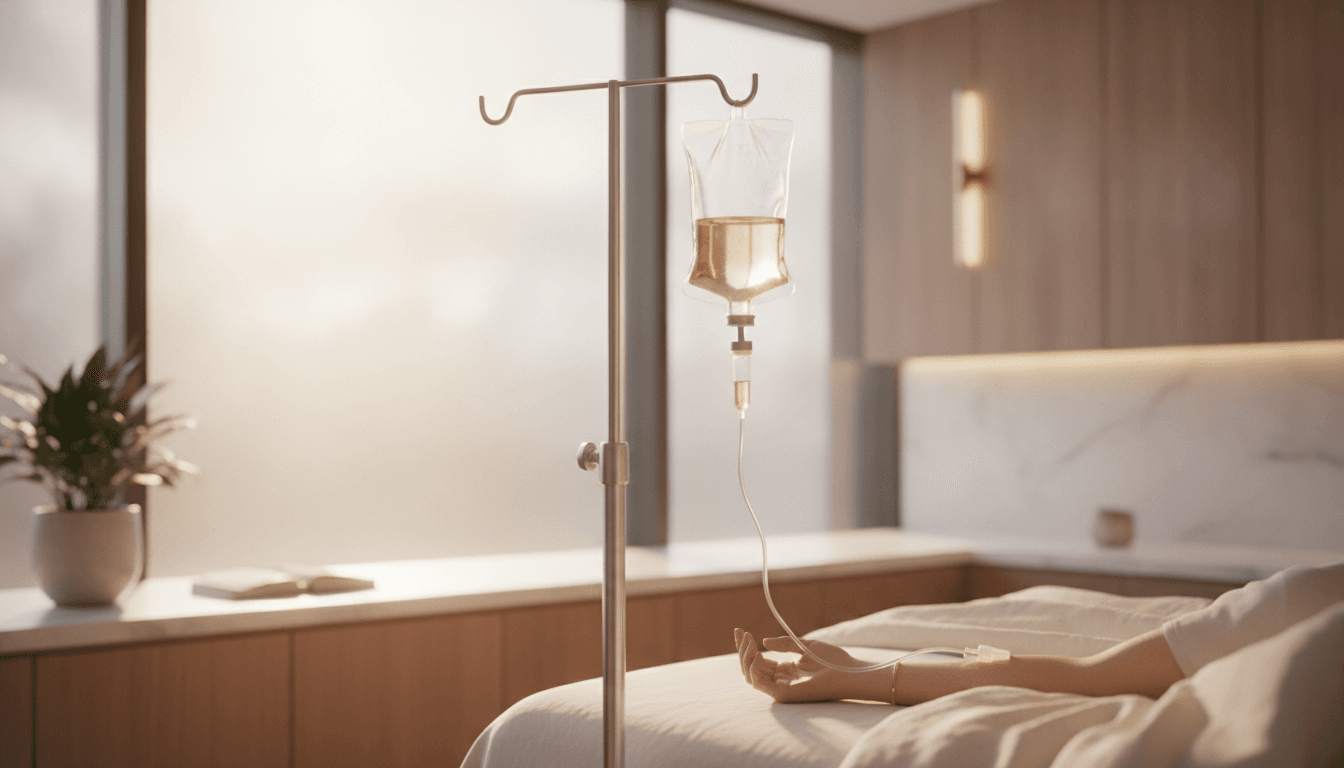
Surgery is stressful in ways that go far beyond the operating room. The physical trauma of going under the knife -- and staying that way for hours -- sets off a cascade of hormonal and immune changes that clinicians have been trying to blunt for decades. A 2025 randomized clinical trial published in Frontiers in Psychiatry added something new to that conversation: a low, carefully dosed infusion of esketamine during acoustic neuroma surgery appeared to protect immune function and meaningfully reduce postoperative anxiety and depression at the same time (https://pubmed.ncbi.nlm.nih.gov/42396903/). That is a finding worth understanding -- whether you are considering surgery, exploring ketamine-based therapy for depression, or simply trying to make sense of what esketamine actually does in the body.
What the study actually did -- and what it found
The trial enrolled adults scheduled for acoustic neuroma removal -- a procedure that requires general anesthesia and can run several hours. Acoustic neuromas are noncancerous tumors on the nerve connecting the ear to the brain; removing them is real surgery with real physiological consequences. Researchers randomized participants into two groups. One received a sub-anesthetic esketamine infusion (0.5 mg/kg before induction, followed by a maintenance infusion of 0.12 mg/kg/hr throughout the procedure). The other received saline as a control.
Both groups were then evaluated at 1 day, 3 days, and 7 days after surgery using validated psychiatric scales -- the Self-Rating Anxiety Scale (SAS) and the Self-Rating Depression Scale (SDS). Immune function was tracked by measuring T-lymphocyte subsets (CD3+, CD4+, CD8+ counts and the CD4+/CD8+ ratio) and natural killer (NK) cell activity.
The results were clear in both directions. The esketamine group scored significantly lower on both anxiety and depression at every postoperative time point. And their immune markers -- the T-cell counts and NK cell activity that surgery reliably suppresses -- were significantly better preserved compared to controls. Pain scores and opioid consumption were also lower in the esketamine group, though the mood and immune findings are the most clinically interesting for our purposes.
This is a single trial, and it is specific to one surgical population. We are not saying esketamine belongs in every operating room. What we are saying is that the mechanism this trial illuminates -- NMDA receptor modulation affecting both mood and immune function simultaneously -- helps explain why ketamine-based treatments are drawing serious research attention well beyond anesthesia.
Why surgery is a mental health event, not just a physical one
If you have ever felt genuinely low in the days after a major medical procedure, you were not imagining it. Surgery triggers a stress response: cortisol surges, pro-inflammatory cytokines (like IL-6 and TNF-alpha) rise sharply, and the cellular immune system -- your T-cells and NK cells in particular -- shifts into a temporary suppressed state (https://pubmed.ncbi.nlm.nih.gov/33857451/). That immune suppression is part of the body's attempt to limit self-damage during healing, but it comes at a cost.
Those same inflammatory signals cross the blood-brain barrier and affect the same pathways that regulate mood. This is sometimes called the "cytokine hypothesis" of depression, and while the full picture is still being worked out, the connection between peripheral inflammation and central mood disruption is well-established enough that major research groups are now targeting it directly (https://pubmed.ncbi.nlm.nih.gov/29532791/).
For patients undergoing high-stakes, prolonged surgeries -- like acoustic neuroma removal, which involves the brainstem-adjacent anatomy -- the postoperative emotional burden can be significant. Studies in enhanced recovery after surgery (ERAS) frameworks have increasingly recognized that psychological outcomes matter as much as physical ones for total recovery time and quality of life (https://pubmed.ncbi.nlm.nih.gov/28097305/). The question is what we can actually do about it.
How esketamine works -- the honest version
Esketamine is the S-enantiomer of ketamine. That means it is not a different drug -- it is the more pharmacologically active half of the ketamine molecule, isolated. It binds N-methyl-D-aspartate (NMDA) receptors with roughly twice the affinity of the full racemic mixture, which is why effective doses are lower (https://pubmed.ncbi.nlm.nih.gov/27699938/).
NMDA receptors sit at the intersection of a lot of things we care about: pain signaling, synaptic plasticity, and mood regulation. When ketamine or esketamine blocks these receptors, it triggers a downstream cascade that includes a rapid burst of brain-derived neurotrophic factor (BDNF) -- a protein involved in growing and maintaining neural connections. This is thought to be a core reason why ketamine produces antidepressant effects within hours rather than the weeks it takes for traditional antidepressants (https://pubmed.ncbi.nlm.nih.gov/32316076/).
On the immune side, ketamine has been shown to suppress NF-kB and MAPK pathways -- the signaling routes that drive the production of pro-inflammatory cytokines like TNF-alpha and IL-6 (https://pubmed.ncbi.nlm.nih.gov/31780208/). By blunting the inflammatory surge that surgery triggers, esketamine appears to protect the T-cell and NK cell populations that would otherwise be suppressed. That is the mechanism the 2025 trial was designed to test -- and the data supported it.
This does not mean esketamine is without risk. At higher doses, dissociation, hemodynamic changes, and -- in the context of misuse -- bladder toxicity are real concerns. Sub-anesthetic dosing in a controlled clinical setting is a different risk profile than recreational use, but the distinction matters and we do not gloss over it.
What this means if you are already thinking about ketamine therapy
If you have been reading about ketamine infusion therapy for depression or have already seen our post on what to expect from ketamine therapy, the 2025 surgical trial gives you an additional layer of context. The antidepressant mechanism is not theoretical or anecdotal -- it is measurable, it is reproducible across very different clinical settings, and it appears to work even in patients who have no prior psychiatric history but are temporarily pushed into a depressed state by a major physiological stressor.
That is actually a fairly elegant natural experiment. Acoustic neuroma patients are not, as a group, people seeking depression treatment. They are people who had a tumor removed and then, like clockwork, experienced a predictable mood dip driven by inflammation and surgical stress. The esketamine group's reduced SAS and SDS scores suggest the drug intercepted that dip at its biological root -- not by sedating the patients, but by modulating the neuroinflammatory cascade before it could take hold.
For someone already living with treatment-resistant depression, major depressive disorder, or an anxiety disorder, that mechanism is the same one ketamine infusion protocols are trying to activate deliberately and repeatedly. The surgical context just makes the signal cleaner.
We also know from separate research that depression and immune dysregulation frequently co-travel. Patients with major depressive disorder show measurable changes in T-cell and NK cell function even outside of any surgical context (https://pubmed.ncbi.nlm.nih.gov/27699938/). Whether targeting inflammation directly -- rather than only neurotransmitters -- will eventually become a first-line approach to mood disorders is an open question. The research is moving fast. You can read more about how we think about evidence-based approaches to mood and mental health in our high performer mental health guide.
What we look at clinically before recommending any ketamine-based treatment
At NoMi Beach Health, Dr. Jezwah Harris (NP, JD, MBA, FNP-BC, MEP-C) does not hand out ketamine referrals based on a questionnaire and a credit card. The evaluation is real. What clinicians look for before recommending any ketamine-based protocol includes:
A confirmed diagnosis. Ketamine-based therapy is not a general wellness infusion. The evidence base is strongest for treatment-resistant depression -- defined as failure of at least two adequate antidepressant trials -- and for major depressive disorder with acute suicidal ideation (https://pubmed.ncbi.nlm.nih.gov/33176077/). If your diagnosis has not been formally established, that comes first.
A medication and substance history. Certain medications interact with ketamine pharmacodynamically. A history of substance use disorder -- particularly dissociative drug misuse -- changes the risk-benefit calculation meaningfully.
Cardiovascular baseline. Esketamine and ketamine raise blood pressure transiently. Uncontrolled hypertension is a contraindication to most protocols. We check this before anything else.
Realistic expectations. Ketamine produces rapid but not permanent relief in most patients. Response rates in treatment-resistant populations are meaningful -- but relapse without maintenance therapy is common. We are honest about that. A course of infusions is the beginning of a treatment conversation, not the end of one.
Coordination with your existing providers. If you are already working with a psychiatrist or therapist, we loop them in. We do not replace existing mental health care -- we add to it where the evidence supports it.
The honest picture on what we still do not know
The 2025 acoustic neuroma trial is well-designed and the findings are clinically meaningful. It is also one trial, in one surgical population, using one specific dosing protocol. We do not know yet whether the immune-protective and mood-stabilizing effects hold across different surgical types, different patient populations, or when esketamine is used in repeated outpatient doses rather than a single intraoperative infusion.
The broader ketamine-for-depression literature is more mature -- there are now meta-analyses and long-term follow-up data supporting its use in treatment-resistant populations -- but the optimal dosing interval, maintenance strategy, and patient selection criteria are still being refined. The field is genuinely moving, which is why we follow the primary literature rather than stopping at what a manufacturer's website says.
What we can say with confidence: the mechanism is real, the short-term efficacy in depression is real, the immune effects seen in this trial align with what basic science would predict, and the risk profile at sub-anesthetic doses in a supervised clinical setting is manageable for most patients who are properly screened.
What a visit with us actually looks like
If you are coming to NBH because you are curious about esketamine or ketamine-based treatment -- whether after reading this, after a difficult surgical recovery, or after years of antidepressants that have not fully worked -- here is what to expect.
The first visit is a 45-minute intake. Dr. Harris reviews your history, your prior treatment responses, your labs if relevant, and your goals. If ketamine-based therapy looks like a reasonable fit, we coordinate with a trusted infusion provider and build a plan that includes follow-up, integration support, and clear criteria for reassessing. If it is not the right fit, we say so directly and tell you what we think should come first.
We do not rush this. We also do not gatekeep indefinitely. If the evidence supports it and the evaluation supports it, we move.
If this sounds like the kind of care you have been looking for, visit our mental health services page to learn more or book a new-patient visit. You can also reach us directly at (786) 744-5152. We will give you a real evaluation, a real answer, and a plan you can defend.
Frequently Asked Questions
- What is esketamine and how is it different from ketamine?
- Esketamine is the S-enantiomer of ketamine -- essentially a more potent, purified form of the same molecule. It binds NMDA receptors more strongly than the racemic (mixed) version, which means effective doses are lower. The FDA-approved intranasal form, Spravato, is esketamine and is approved for treatment-resistant depression and major depressive disorder with acute suicidal ideation.
- What does 'sub-anesthetic dose' mean?
- Anesthetic doses of ketamine put you fully under for surgery. Sub-anesthetic doses are much lower -- typically 0.1 to 0.5 mg/kg -- enough to produce antidepressant and anti-inflammatory effects without general anesthesia. These are the doses used in depression treatment protocols and in the trial discussed in this post.
- Why would surgery cause depression or anxiety in the first place?
- Surgery triggers a significant stress response: cortisol spikes, inflammatory cytokines rise, and the immune system temporarily shifts in ways that can blunt mood-regulating pathways. Patients undergoing prolonged or high-stakes procedures -- like acoustic neuroma removal -- are at real risk for postoperative depression, anxiety, and sleep disruption, which can slow recovery.
- Can esketamine help with anxiety and not just depression?
- The 2025 randomized trial measured both anxiety (using the SAS scale) and depression (using the SDS scale) and found significant reductions in both at 1, 3, and 7 days post-surgery in the esketamine group. Anxiety and depression frequently co-occur, and NMDA receptor modulation appears to affect both -- though the anxiety data is less mature than the depression data.
- Is this the same as ketamine infusion therapy for depression?
- Mechanistically related, yes. Both use sub-anesthetic ketamine or esketamine to rapidly modulate NMDA receptors and downstream mood pathways. The difference is context: the trial used esketamine intraoperatively as a one-time adjunct, while ketamine infusion therapy for depression typically involves a series of outpatient infusions over two to three weeks. We go deeper on outpatient ketamine therapy at /blog/ketamine-therapy-for-depression-what-to-expect.
- What immune markers did the trial actually measure?
- The researchers measured T-lymphocyte subsets -- specifically CD3+, CD4+, and CD8+ counts, plus the CD4+/CD8+ ratio -- as indicators of cellular immune function. They also tracked natural killer (NK) cell activity. Surgery reliably suppresses all of these; the esketamine group showed significantly better preservation of these markers compared to the control group.
- Should I ask about esketamine before my next surgery?
- That is a conversation worth having with your surgical team if you have a history of depression, anxiety, or postoperative mood struggles. We can help you understand the evidence and frame the question -- but the decision about intraoperative anesthetic adjuncts belongs with your anesthesiologist and surgeon. What we can do at NBH is evaluate your mental health baseline and coordinate care around major medical events.
Sources
- Zhang Y, et al. Effects of sub-anesthetic doses of esketamine on immune function and postoperative negative emotions in acoustic neuroma patients: a randomized clinical trial. Front Psychiatry (2025).
- Corriger A, Pickering G. Ketamine and depression: a narrative review. Drug Des Devel Ther (2019).
- Ionescu DF, et al. Esketamine nasal spray for rapid reduction of depressive symptoms in patients with major depressive disorder who have active suicidal ideation with intent. J Clin Psychiatry (2021).
- Byers AL, Yaffe K. Depression and risk of developing dementia. Nat Rev Neurol (2011).
- Zanos P, Gould TD. Mechanisms of ketamine action as an antidepressant. Mol Psychiatry (2018).
- Ljungqvist O, Scott M, Fearon KC. Enhanced Recovery After Surgery: A Review. JAMA Surg (2017).
- Shao L, et al. Ketamine inhibits LPS-induced TNF-alpha and IL-6 through suppression of NF-kappaB and MAPK pathways in RAW264.7 cells. Biochem Biophys Res Commun (2020).
- Abdallah CG, et al. Ketamine's mechanism of action: a path to rapid-acting antidepressants. Depress Anxiety (2016).
- Menzies FM, et al. Stress, immunity, and the management of patients with cancer. Lancet Oncol (2021).
- Papakostas GI, Salloum NC, et al. Efficacy of esketamine augmentation in major depressive disorder: a meta-analysis. J Clin Psychiatry (2020).